


In the movie business, January is called a “dump month.” It’s where you offload all the low quality junk that wouldn’t perform if it had to compete. All publication channels are familiar with this dynamic. For political news there are few worse times to publish than a Friday afternoon. Everyone is going home, they got plans for the weekend, so no one is reading about your ribbon cutting. The only worse time to publish something is the bright early hours of a holiday. You might as well not publish it at all.
Hearst Connecticut published Mayor Caroline Simmons’ piece on the budget at 5am for Easter Sunday. It was immediately knocked off the Stamford Advocate’s Opinion carousel by another story about UConn Men’s Basketball. The article appears to have no formatting — not even paragraph breaks — suggesting it was copy/pasted and published without being read.
This piece doesn’t say anything. I imagine the whole city knows telling our mayor she did a bad job is tantamount to self-exile, so I volunteer to articulate why everyone reads this as vacuous bullshitting.
This week, Stamford residents have an important opportunity to weigh in on our city’s financial future. A municipal budget is a statement of our values and a roadmap for where we want our city to go. For FY2026-2027, I proposed a robust budgetary blueprint for the City of Stamford, designed to deliver progress on the issues residents care about most: investing in our schools, expanding affordable housing, and maintaining the critical infrastructure that keeps our neighborhoods vibrant and safe.
“Deliver results” is such a well-known business term it is enshrined as one of Amazon’s guiding principles. Everyone understands the value of delivering a result. You did something. Something happened.
That is far too much certainty for career politicians. They like to keep things to vague, so our mayor delivers progress.
What about “the issues residents care about most”? What are those issues? I think most people could rattle that off without any research. I certainly care about housing costs — whether it is rent or property taxes. I’m not in the school system, but it would be nice if they were not irradiated with mold. I guess you could keep the crime rate down? That keeps us safe and vibrant. Those issues come top of mind.
Of course, I’m not expecting results. I would never be so bold to expect an elected leader to do something. I want to see them deliver progress. Not the goal itself — some other ancillary second thing that’s kind of similar.
I don’t want a new school, I want to “invest in schools” (spend money).
I don’t want my rent to go down, I want to “expand affordable housing” (spend money).
Finally — I don’t have any expectations for our infrastructure, I just want to “maintain” whatever is “critical” (by spending money).
If any elected official ever dared to state an achievable goal, then I would be aghast at their recklessness. Every statement, action, and policy from political leaders should be graded on the metric of “could this be disingenuously repackaged in a 10 second attack ad decades from now?”
Be vague about your goals, so you can be vague about your failures. Don’t say you care to achieve anything. Signal some vague statement where it isn’t clear if you said anything. “We here for you.”
After all, none of this really matters. I don’t vote in a local election to change my community, I vote to give some aristocrat a resume item they can talk about in their memoir. My Quiet Strength or maybe The Power of a Smile. Maybe I’ll be quoted about how I brushed shoulders with them prior to the nascent and unidentified (but wholly positive) brand identity they will achieve later (somehow).
Heading into this budget cycle, our commitment to responsible budgeting puts us in a position to invest in our future. As we contend with fixed cost increases alongside municipalities nationwide, this budget reflects my commitment to making the tough decisions necessary so that we do not balance the budget on the backs of our residents. This is why Stamford continues to maintain an average mill rate that is lower than every other major city in Connecticut.
The first line essentially says “Heading into the budget, our commitment to having a budget positions us to have a budget.” Hard to tell who that explanation is for. Us? Or the author(s)?
The last sentence about the mill rate has no relationship to the rest of the paragraph. As covered elsewhere, Stamford’s mill rate is low because our property valuations are high. Comparing the mill rate to other communities in this way is — at best — dishonest and — at worst — illiterate. For example: one way to dramatically reduce the mill rate is to be in a housing crisis where valuations are artificially increased. You get more out of 4% on $1M then you do for 5% on $750k. Meanwhile everyone is paying more dollars for their tax bill.
I don’t know if I’ve heard of someone talk about a “tough decision” without referencing the aforementioned decision that was apparently tough. Is the tough decision that the mayor said no to some popular proposal or person? I don’t see any evidence of that. Is the tough decision agreeing to spend everyone else’s money? I guess if we’re evaluating “progress” over “results,” then why get bogged down on the details? Your money is flowing, ya know… somewhere — that isn’t your back!
Stamford is in a strong position today — backed by a AAA bond rating, year over year surpluses for the past four years including a current projected $6 million in surplus, growing revenues, and a grand list that has now grown from $22 to over $27 billion. This balanced growth coupled with responsible budgeting allows us to invest in neighborhoods, infrastructure, and our school system at a lower cost, saving taxpayers millions in debt service costs while funding vital projects.
While it is true it is much better to run a surplus over a deficit, this is government spending — not a business. Simmons has ran a surplus large enough to be the entirety of the tax increase the prior year. I have never seen that pitched as a good thing. Obviously, we’d rather have a surplus than a deficit, but double digit surpluses for half a decade is an accounting problem.
Our commitment to providing high-quality learning environments for our students and teachers remains one of my administration’s top priorities. For too long, our school buildings were neglected, but today, residents can see tangible progress happening across the city.
Progress: DELIVERED.
Construction for the new Westhill High School is set to begin this spring, and we are moving forward with critical safety and air quality upgrades at Newfield Elementary, AITE, and Northeast Elementary, as well as continued improvements at all our schools. Most importantly, by allocating an additional $10 million to Fund 57, we are responsibly funding our historic school construction program through current revenue rather than long-term debt. This strategy protects future generations from unmanageable debt while ensuring that our schools remain a positive asset for our community rather than a budget burden.
In the Martin administration, the construction of Strawberry Hill School was promoted for state-of-the-art media center, expanded classroom capacity to reduce overcrowding, and the historical preservation of a farmhouse on the property. For Westhill High School’s new half a billion dollar facility apparently all there is to say is “kids will breathe air and not die.” There probably is some cool achievement in that building — just not something the mayor has any interest in (not like her kids are going there).
I actually like Fund 57. It’s a smart decision to avoid interest costs. It is also the only substantive policy listed in this entire piece, so you may be unsurprised to know it was not the mayor’s idea. The Board of Finance came up with it.
The national housing crisis is felt deeply here in Stamford, and my administration is taking action to address this challenge. This budget proposes a $3 million investment to advance critical affordable housing initiatives. This includes $2 million to support the rehabilitation of 215 units at Stamford Manor serving seniors and non-elderly residents with disabilities, and $1 million to help redevelop 240 existing units into 305 affordable units at the St. John’s Towers site. This funding reflects a strategic approach to preserving and investing in our existing housing stock, while also preparing for responsible growth. Our goal is to ensure that everyone can afford to call Stamford home.
Finally, we’re onto housing — easily the number one issue in the city. I am encouraged the verbs have changed now that we’re talking about a real crisis. We have dispensed with delivering progress and now we are taking action. All right! What are we doing?
Everyone knows Stamford has high rents. The city has 130k+ residents and roughly 55,000 housing units. If we want to meaningful impact the cost of housing, we might replicate New Rochelle. In that city, a modest 1 percent increase in the housing stock every year for a decade stabilized rents and resulted in a brief decline in median rent between 2020 and 2023. That means Stamford could build 600 housing units a year to keep pace — or be a real leader in the space and commit to 1,100 new units a year. Maybe something really inspiring like 2,200 units a year to deliver real rent decreases within a mayoral 4-year term! I mean, New Rochelle proved it works despite being close to New York City, the city’s housing model is supported by Democratic Governor Kathy Hochul, and this model would deliver progress addressing the challenge. Is this the new national Democratic platform Simmons is going to copy here? ARE WE GOING TO FLIP THE ‘FIX EVERYTHING EASILY’ SWITCH?!
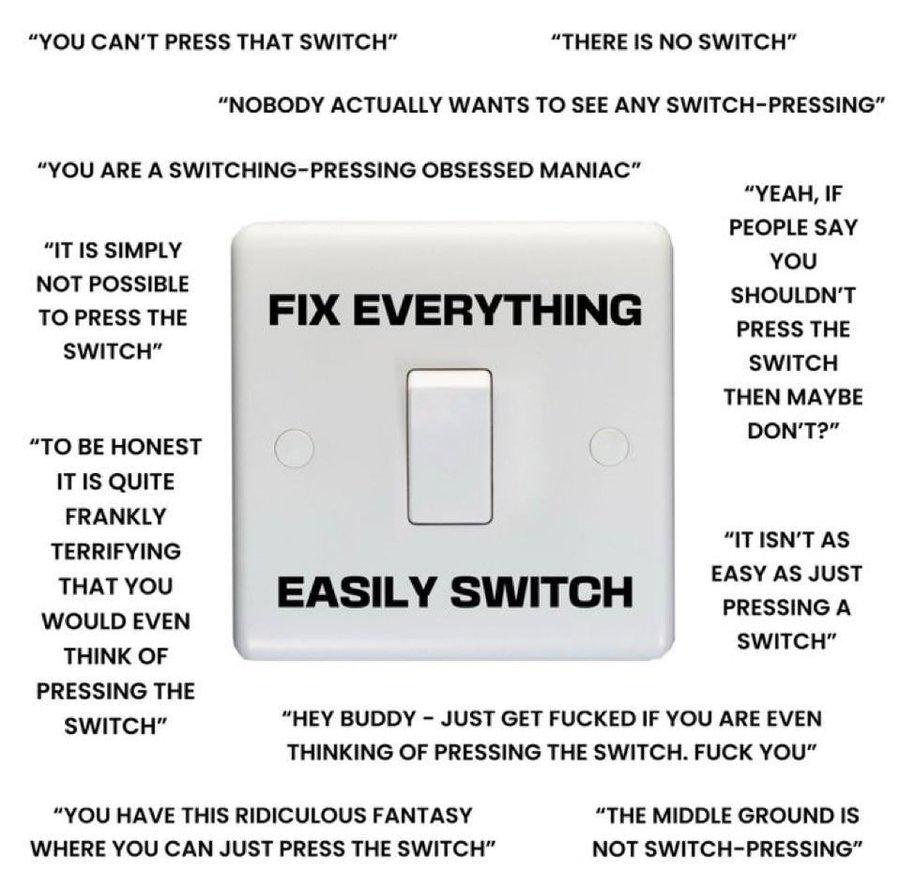
No.
We’re getting a net 65 new units! A 0.1 percent increase!! And… wait a minute… Holy fucking shit! It’s NOT market housing?!! It’s 65 units that the vast majority of the public is ineligible to live in?!!! OMG!!!! I CAN’T BELIEVE IT!!!!! WE WON!!!!!!
I am also focused on building upon investments to improve vital infrastructure that keeps our city moving safely and efficiently. It’s important for residents’ quality of life, and it allows us to retain and attract new jobs and economic opportunities. Following the successful paving of more than 200 roads over the last four years, this budget continues our commitment to investing in our streets and sidewalks, upgraded roadway design to improve traffic flows, and enhancing bike and pedestrian safety.
I imagine on the seventh revision of this piece written by committee some despondent secondary aide made their greatest contribution by pointing out the word “critical” has already been used to describe infrastructure, safety, and affordable housing so now we have introduced a new adjective — vital infrastructure.
Otherwise yes, dare I say I do agree with our mayor — being able to move in a city is important to my quality of life. If I were not able to move, it may be difficult for me to depart for other economic opportunities, but witness me lord I would overcome this vexation at great haste for a domicile where they had no fewer than two hundred AND ONE(!) roads paved.
If I were such a sufferer of lethargy I might actually be deceived in the presentation of “enhanced bike safety” to imply — ever so surreptitiously — the arrival of a lane of traffic dedicated to mine own Schwinn. But fear not! No promise of biking infrastructure was promised! Only “bike safety.” As stated in our ambitious Vision Zero there is no greater safety initiative than discouraging travel at all. No bike lanes at all! No, no no!
Additionally, our $73.2 million capital plan prioritizes investments in our parks and neighborhood assets, including renovations at Cove Island and Hatch Field Parks, citywide park lighting and bathroom improvements, ensuring every resident has access to a quality park within a 10-minute walk of where they live. This budget also invests in new community assets, including funding for the design of an East Side Library branch and funding to support the demolition of the old Animal Care & Control Center, which is currently being rebuilt.
“In conclusion, I have spent a lot of money.”
The joint Board of Finance and Board of Representatives public hearing is on Wednesday, April 8, at 7 p.m. at Rippowam Middle School, and I encourage all residents to participate in this process. If you cannot attend in-person, more information about ways to contact your representatives can be found at stamfordct.gov. Together, we can ensure that this budget prioritizes key investments in our community and further supports the services, infrastructure, and opportunities that make Stamford a great place to live, work, and raise family.
It is an interesting tactic to write a piece dedicated entirely to listing all the millions you’ve thrown around, then have a call to action for everyone to show up and talk about it. Also interesting to defend a policy decision without saying what decision was made. This is a 6.32 percent proposed increase — the highest since the Great Recession.
There’s no clear statement of anything in this entire piece. It doesn’t read like it was written for residents. What would they gain by reading it? What was the purpose of the piece?
My recommendation
If I put on my pundit hat, I can’t help but notice the mayor forgot to blame her proposed tax increase on someone else. Previously, she blamed the increase in costs due to “tariffs” and “chaos at the federal government.” “Working ahead of cuts to Medicaid” — or whatever. Nothing about that here. She’s taking credit for all the money she’s spending and wants you to know about it like it’s a good thing.
The strategy might make sense if she connected it to some coherent narrative, but there isn’t one. The only apparent narrative is “I’ll just say yes to anything.” If the mayor wanted a more left-leaning, affordability focused, type of story she can borrow these free talking points:
Our budget increased because I am looking out for the working class who can’t afford to live in Stamford. Almost certainly a major driver of the budget increase is the various union contract negotiations — including a contract 3 years ago the Board of Finance unanimously recommended to reject. The Board of Reps approved it and that was probably a terrible decision, but whatever — own the messaging. “We want our police officers to work and live in Stamford and many of them cannot afford the cost of living. I am keeping our finest in Stamford.” Of course, this would set you up to give even more generous union contracts to teachers, managers, and operations workers — which is exactly why the Board of Finance voted against it. It’s also pro-cop — so good luck selling that to your Democratic voters... and you might accidentally mention ICE, then you might have to answer why you didn’t vote for the TRUST Act. Hmm.
The federal government is playing games and you’re paying for it. I am confident tariffs are increasing costs in general… but for a municipal budget? I don’t get it but it doesn’t matter. Most Democrats in Stamford are eager to blame Trump for all their problems anyway, so give the people what they want. “The president is playing games with the global economy for his ego and you’re paying for it. You’re paying for it in increased material costs across the city operating budget, you’re paying for it in increased insurance costs because of global volatility, and you’re paying for it through a lack of leadership in our country. I am the leader of Stamford. I’ve looked at the budget and this is what we need to keep our community whole. I’m not happy about it either, but that’s the truth.” Always good to reference “the truth” when you’re bullshitting. People love that.
I am a responsible steward for our housing supply. I think Simmons is so bad at advocating for housing, she might as well become a NIMBY. She can dress it up with other language, but she should start flapping those duck wings after walking and quacking like one for four years. “We’re still experiencing a high influx of demand due to people fleeing New York City and inflation continues to disrupt supply chains for housing materials. Given that unstable environment, now is not the time for us to redesign our city’s housing inventory. My efforts have focused on improving housing inventory to the benefit of current residents and replacing any units that are lost from otherwise necessary demolitions. As Mayor, I have already leveraged the income of renters to subsidize single family homeowners and I have intervened to prevent change in local neighborhoods. You can trust no significant housing will be built under my watch.” It won’t win her any friends among people who have a clue about economics, but they don’t like her already.
My alternative recommendation for the mayor may be more actionable. For Wednesday’s meeting, send an email around 11pm the night before saying your tummy hurts. Then — the next day — call out sick.