

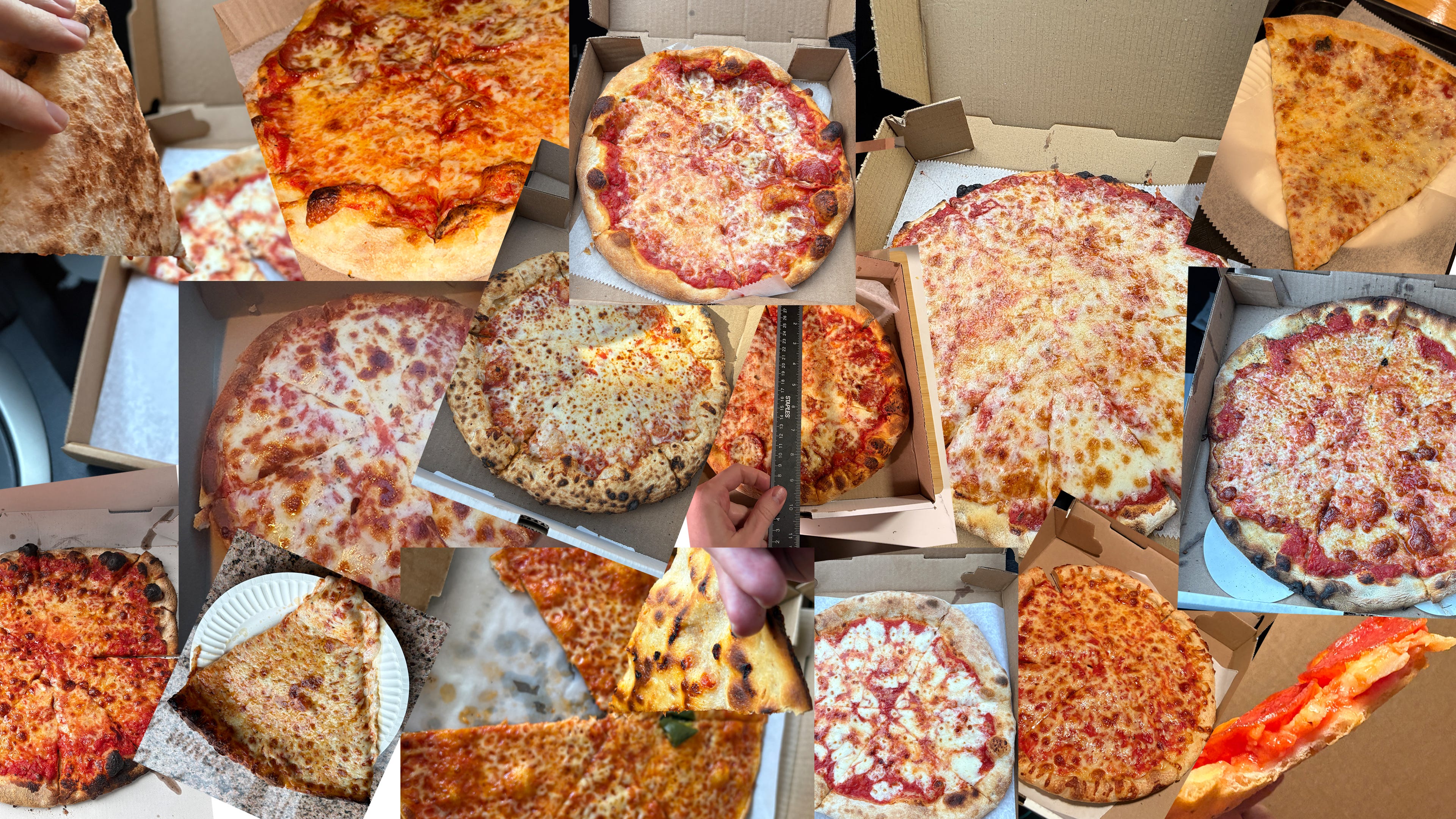
There is a lot of pizza in Stamford. How much pizza? And what’s the difference between all of them?
That was the mission of Feather Ruffler’s Definitive Guide to Stamford Pizza. This article is real journalism — informing the public about their pizza options in Stamford using a detailed description of the various pizzas in town. This guide may be used to:
Find your favorite pizza place.
Understand why you like certain pizzas and not others.
Argue with other people about pizza supremacy.
Give new arrivals a fun activity — like trying every pizza place on the list.
However you choose to use this list, remember what this list is not.
This is not a “ranking” of pizza in Stamford.
There may be numbers and pictures in this guide, but there are no “rankings.” I have my own personal preferences, but who cares? There are many ways to enjoy pizza.
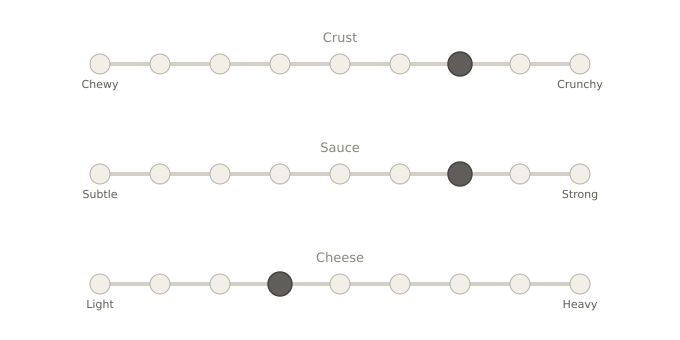
Instead, the guide provides an attempt to objectively measure the different ways to make a pizza. This begins by identifying the three core elements of the pizza and defining a “spectrum” of each individual element. These elements and ends of the spectrum include:
Crust, with a spectrum between chewy and crunchy. Sometimes crust has a distinctive “crunch” noise and sensation when you bite into it. Other times, the crust melds with the other elements so it feels more “chewy.” Our crust evaluation includes the “end crust” — the part you hold while eating pizza — but also the “under crust” which is what the majority of the pizza rests on. Remember all “end crust” is typically crunchy, even if the “under crust” is otherwise “chewy.” This guide frequently uses the word “crisp” and “crispy” which should be read as a gradation of “crunch” and “crunchy.”
The chewiest rating is doughy.
The crunchiest rating is fire-kissed.
Sauce, with a spectrum between subtle and strong. When you bite into pizza you will taste flavor. Sometimes the sauce has a strong influence on the flavor. Other times, the sauce has a subtle influence on the flavor. In creating this guide, we always isolate the sauce and taste it independently from the rest of the pizza to verify where the flavor comes from. At the same time, a lot of pizza is cooked so the cheese and sauce “meld” together. In those instances, we talk about the “sauce” as a general “flavor.”
The subtlest rating is absent.
The strongest rating is dominant.
Cheese, with a spectrum between light and heavy. Simply put, sometimes pizza has a heavy amount of cheese and other times it’s light. We evaluate cheese on volume because it’s the most objective measurement of the cheese’s influence on the pizza.
The lightest rating is sparse.
The heaviest rating is loaded.
This guide also identifies a primary element. This is not the “best” element, but which element – between crust, sauce, and cheese – is most present in the bite experience. In other words, what do you experience when you bite into the pizza? The idea behind identifying the primary element in the bite experience is to help people identify if it’s the type of pizza they might like.
Again: this is not a list of the best pizza. Your pizza is not “better” if the evaluation is on the right-side of the spectrum. It’s not a rating. There are many ways to enjoy pizza. We hope this guide helps you find the pizzas you enjoy.
Finally, this guide will continue to grow. Future updates will include:
Literally every single pizza place. Currently the guide has 21 pizza places. I only stopped because I started to get really bad heartburn from eating pizza every day. Some obvious misses include:
Cove Pizza
John the Baker
Michael’s Pizza
Pizza Planet
T’s
Towne Parlor
Westover Pizzeria
Unique options. This guide is purely for cheese pizza, but not every pizza place is known for its cheese pizza. This may include the white pizza from Slice, the Lomo Saltado from Cove, the best Hawaiian, etc.
Pizza by the slice and pricing. Not everyone wants to order a whole pie. Where can you get a slice and how much does it cost?
Future updates are TBD.
Pizza Terminology:
Tavern style. Extremely thin crust – thinner than New York Style – crispy and chewy at the same time. Pies tend to be smaller with simple ingredients.
Greek style. Brittle crust that holds its shape but easily broken down in the bite experience. Heavy emphasis on cheese.
New York style. Thin crust with outer layer of crispiness for an otherwise chewy bite experience. Flavor is traditionally from the sauce with minimal cheese.
New Haven style. Crunchy and thin crust – frequently charred for flavor with powdery flour residue to create what I refer to as a “fire tasting crust.”
Neapolitan style. Soft and puffy crust with occasional charred spots. Cooked at extremely high heat for a very short amount of time.
Neighborhood style. I am borrowing this term from someone who joined me for these tastings. A neighborhood pizza doesn’t fit the above terms, but it’s what someone local might say “yeah, that’s pizza to me.” A “middle of the road” pizza with no primary element.
Definitive Guide to Stamford Pizza
Last updated: August 22 2026
The list is alphabetical. Click to jump to the entry you want to read:
Amore
Neapolitan style.
921 Hope Street, Stamford, CT 06907. Springdale neighborhood.
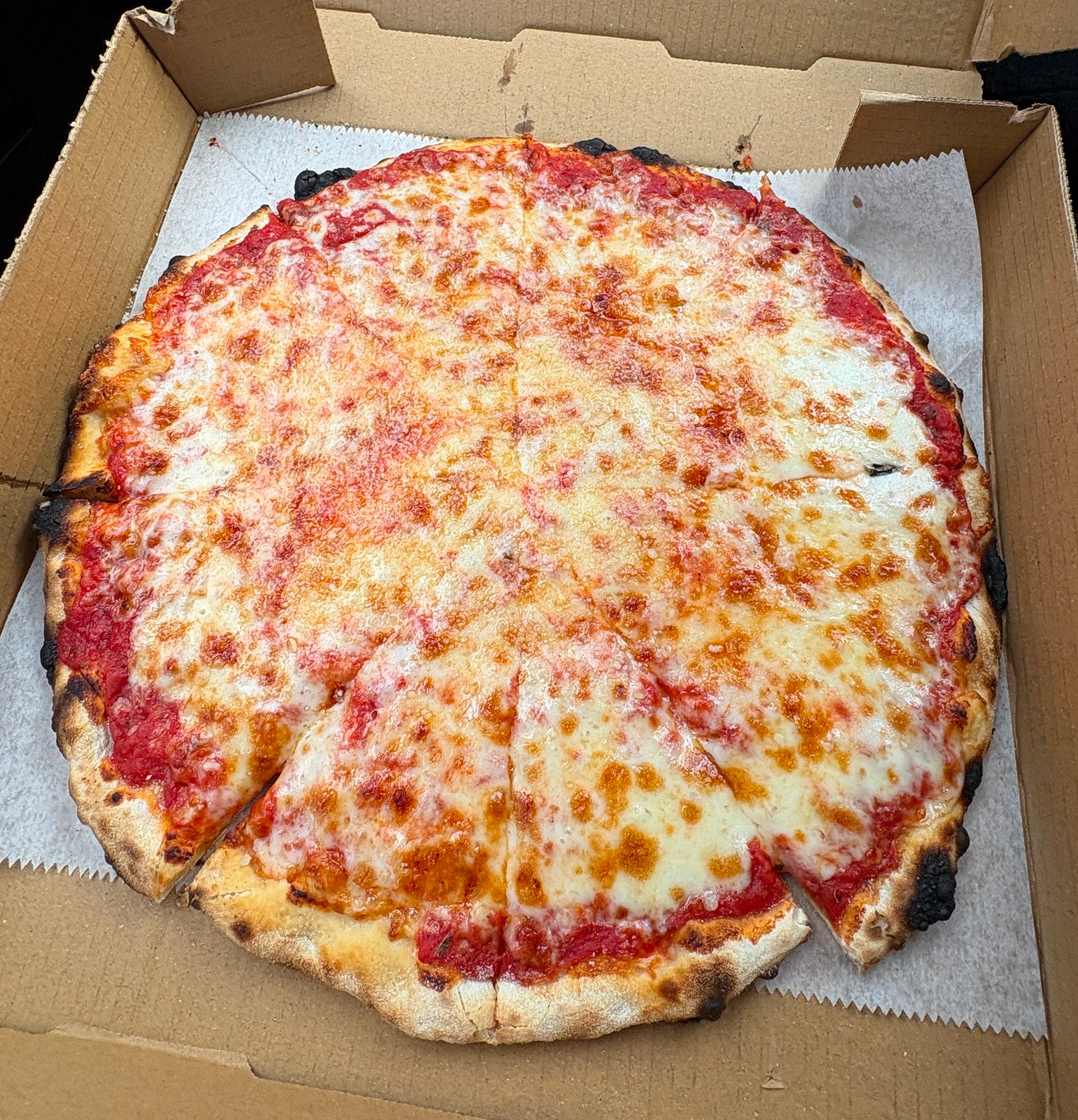
Primary Element: Sauce.
Crust. Amore’s pizza crust is closest to the Neapolitan style, but it is slightly different. Like with other Neapolitan pizzas, Amore’s crust is fluffy and lightly crispy. You’ll get a slight crunch at the outermost layer of the crust, but it is otherwise a chewy bite experience. There is also light charring, but it is a minimal amount of that fire taste so it does not overwhelm the flavor profile. What’s most different for Amore’s crust compared to typical Neapolitan is it is very flaky and thin. It’s easy for bits of crust to break off and fall into your plate/lap while you eat. Both the under crust and end crust are thinner than usual too. This isn’t a pizza where you find yourself chewing on the crust for a while. The under crust is especially thin – which minimizes the amount of crispiness in the bite experience. Generally, a challenging crust to evaluate on our scale since the different elements work against each other. Slightly Chewy.
Sauce. Amore’s pizza has a lot of sauce and a lot of spices in the sauce. The most prevalent spice is oregano, but generally this is an herbaceous sauce. The flavor profile of the sauce is the mixture of different spices and herbs. There’s still a slightly acidic tomato base flavor, but it is minimal compared to the other flavors in the bite experience. Beyond the flavor, the amount of sauce is also well above average. I believe Amore may be the juiciest bite experience of all pizzas in Stamford. You can feel the sauce in every bite. Dominant.
Cheese. Amore’s pizza has a lot of cheese. The overall amount is high, but Amore also uses multiple types of cheese. The most obvious is parmesan – sprinkled across the entire pie. The base cheese appears to be a mixture of several cheeses as well, but I can’t identify the different ingredients from taste alone. The amount of cheese for Amore is unique because this is a style of pizza that does not typically have an above average amount of cheese. Very Heavy.
Overall. You might call Amore a “fancy pizza,” because its flavor profile is defined by herbs and the establishment is a restaurant rather than a pizza place. If you have some preconceptions of what pizza should taste like – specifically that it shouldn’t have too many herbs or parmesan cheese, etc. – then Amore may be beyond what you’d consider for pizza. If you don’t have those preconceptions, Amore surprised me as one of the more unique options in the city. It’s one of the few pizzas that has something interesting going on with all three elements rather than focus on one or the other. If nothing else, this is the juiciest pizza thanks to its heavy sauce application and that may be reason enough to check it out.
Atlantic Street House
Greek style.
221 Atlantic Street, Stamford, CT 06901. Downtown neighborhood.
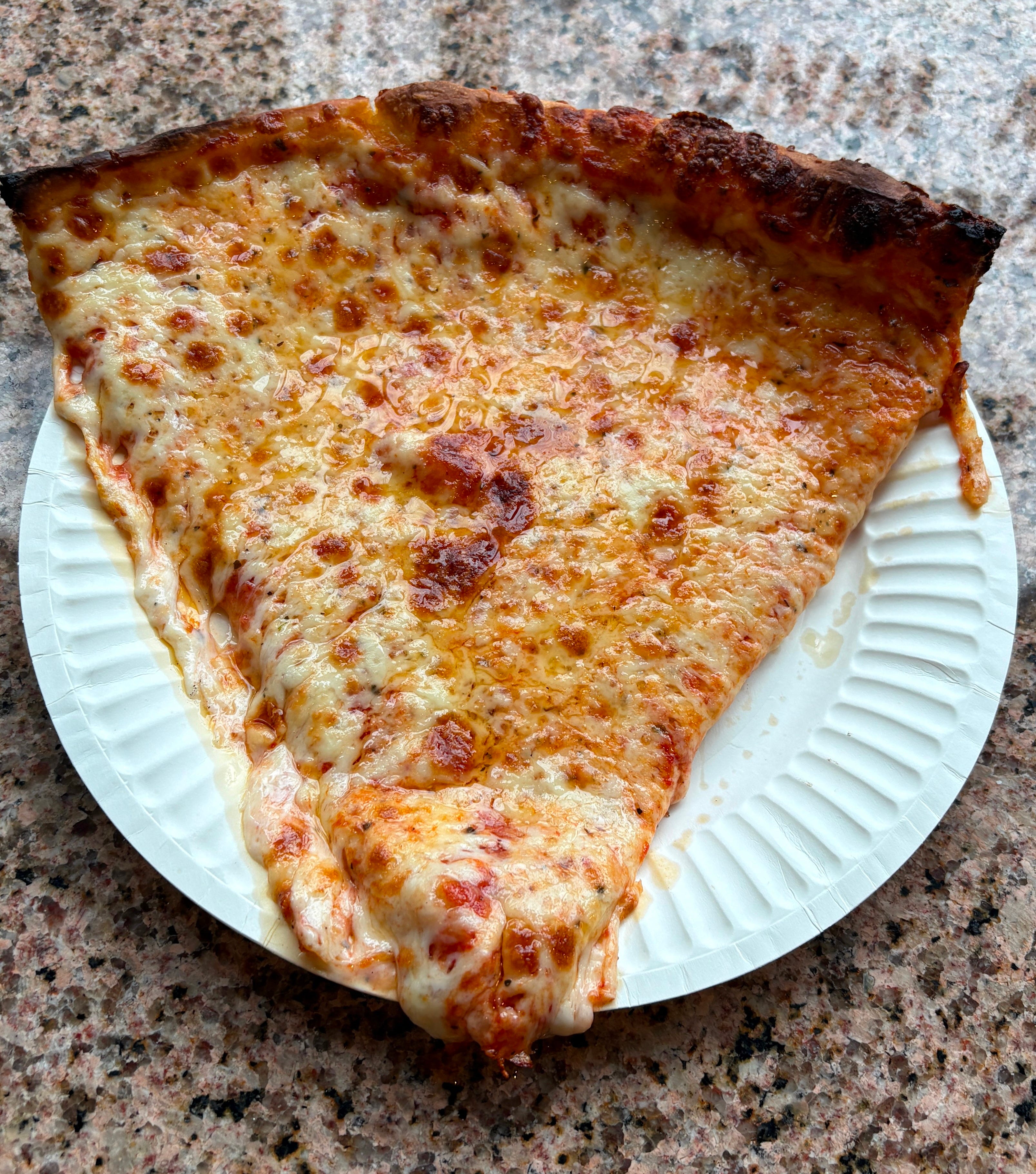
Primary element: Cheese.
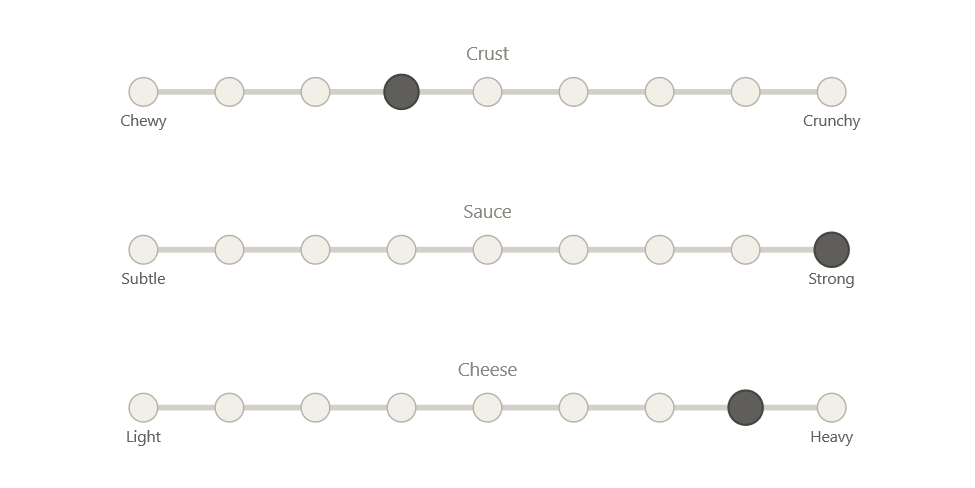
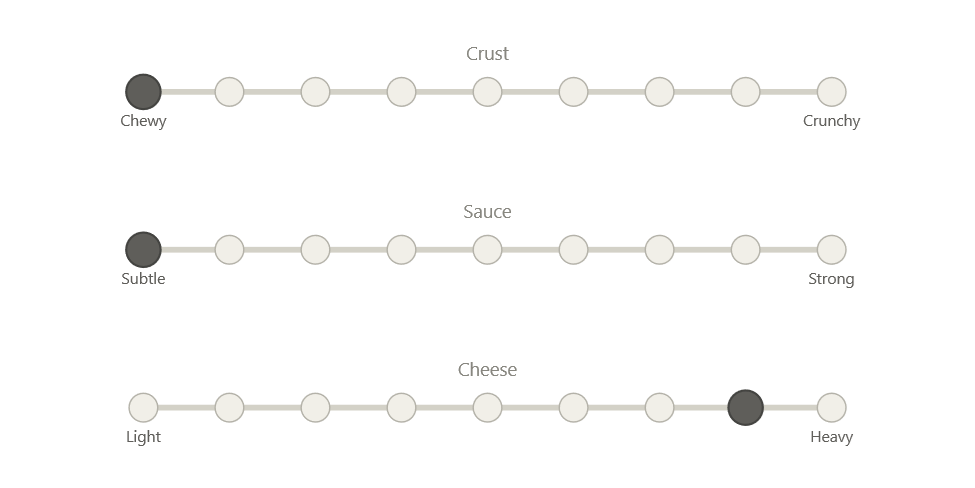
Crust. Greek style pizza is generally on the “chewy” side of the spectrum, but Atlantic Street House is uniquely chewy. The dough has a light cook. Its texture is soft and its color appears white rather than brown or charred. If you like the idea of an “undercooked” crust, that is what you’re getting with Atlantic Street House. The end crust has a Focaccia bread type of bite experience. The end crust has a bit of crunch — all end crust does — but it’s an airy crunch with minimal resistance in the bite. I would call it “brittle.” Hard at first but breaks easily. Overall, the crust experience melds with the cheese into a ball of savory flavor. Doughy.
Sauce. Minimal sauce with no detectable flavor. I wasn’t able to isolate the sauce to taste it independently from the rest of the pizza. It’s very subtle and lightly applied. Absent.
Cheese. Consistent with Greek style pizza, there is a heavy application of cheese for this pizza. For Atlantic Street House specifically, I would say the entirety of the pizza hinges on your opinion of the cheese. It is not heavily seasoned. There’s no detectable saltiness, oregano, or acidity to the flavor profile. It’s driven by the savory flavor of hot cheese. The heavy application means there’s a lot of grease/oil which is the sole contributing flavor of the pizza. Very Heavy.
Overall. Atlantic Street House is one of many Greek style pizzas in the city, but this is the “most Greek style” of any others. It’s very heavy on the cheese, it is very chewy with the crust, and the sauce is essentially not there. There’s no other flavors beyond what you get with standard crust and melted cheese.
Belltown Pizzeria
Neighborhood style.
31 Belltown Road, Stamford, CT 06905. Midtown (Bulls Head) neighborhood.
Primary Element: Balanced.
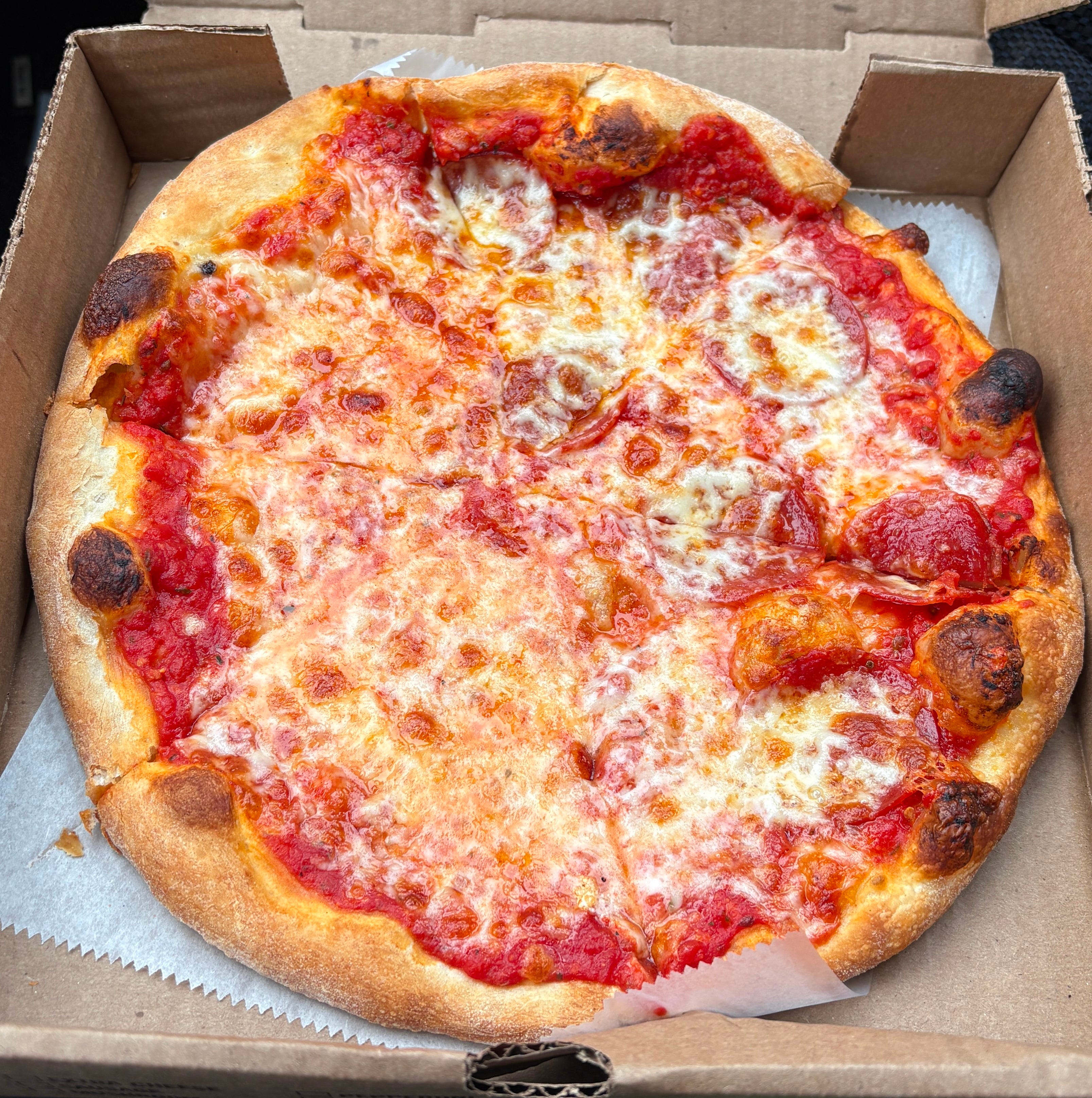
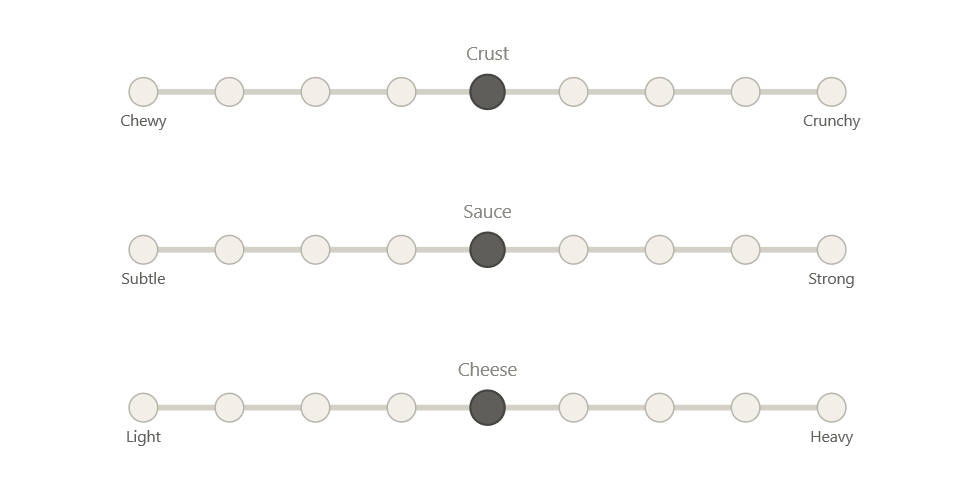
Crust. Distinctive crunch, minimal doughiness due to overall thinness. It’s on the crunch side of the crunchy-to-chewy spectrum but just barely. Average.
Sauce. Sauce is lightly applied underneath the cheese. It presents very prominently where the cheese meets the end crust, but its flavor contributions are mild. There is a garlic flavor profile, but it is a taste that is influenced by garlic and not purely a “garlic tasting sauce.” Average.
Cheese. Cheese is thick enough to act as a unique layer of the pizza. I want to say it is “above average”, but I think that’s mostly because so many pizzas in Stamford have a lighter application of cheese. Maybe it’s a little bit more than usual. Average.
Overall. No clear primary element of the pizza. This is a middle-of-the-road option for many people with no clear preferences between crust, sauce, and cheese.
Bronx House Pizza
New York Style
27 Ryan Street, Stamford CT. 06907. Springdale neighborhood.
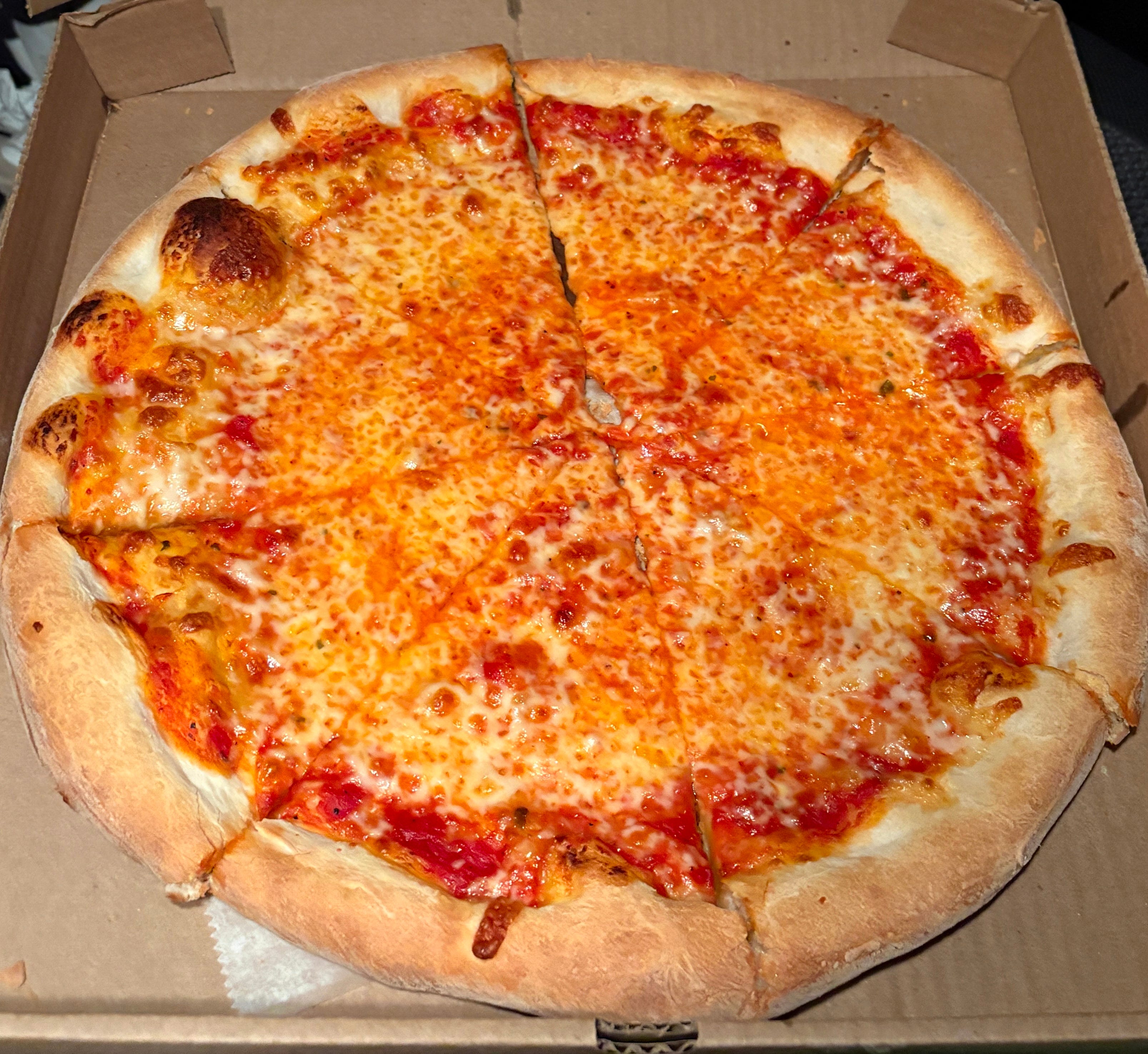
Crust. Bronx House Pizza’s crust is classic New York style. A very thin outer layer of distinct crunch in an otherwise very chewy bite. This is the defining trait of New York style pizza. The under crust has some minimal browning (as opposed to “charring”) so it has a firmer base than other similar pizzas. You could say it has minimal “flop.” The extra cook to the under crust also influences the experience of the end crust. The outer layer of crunch is still there, but with a little more cook and no interaction with the sauce, the end crusts can be a little dehydrating. Average (5/9).
Sauce. Bronx House Pizza’s sauce is melded with the cheese. Very minimal sauce underneath the cheese layer. However, the cheese feels wet. Each bite has a noticeable amount of liquid. Even when the crust is stripped of any cheese and there’s not much to see, the dough of the under crust is not dry. The sauce leaves an impact on the hydration of the under crust even after it has melded with the cheese. That impact even in its absence kicks it up a couple spots Moderately Subtle (3/9).
Cheese. Bronx House Pizza’s cheese melds with the sauce so it is the origin of most of the flavor in the bite experience. The flavor has a taste I can only describe as “what I associate with New York style cheese pizza.” I would say that flavor is derived by the oil of the cheese combined with the wetness of the sauce. Even as the pizza starts to get hold – say a half hour after ordering – you can still get that distinct flavor of oils from cheese and the hydration of the sauce. This flavor dynamic is evident to some extent in all New York style pizzas, but Bronx House Pizza sticks to this signature flavor with little deviation. Given the influence of the cheese, it gets an above average assessment. Moderately Heavy (6/9).
Overall. Bronx House Pizza is appropriately named. This is a New York style pizza that faithfully executes what you might get in New York City. Other New York style places have some unique outlier element — sauce is a little punchier or the crust is chewier — but Bronx House Pizza really sticks to the classic culinary design. This was one of the most popular requested pizza locations after the launch of this list and it’s easy to see why. It is providing something many people from NYC consider “pizza.”
Coalhouse Pizza
Neapolitan style.
85 High Ridge Road, Stamford, CT 06905. Midtown (Bulls Head) neighborhood.
Primary Element: Crust
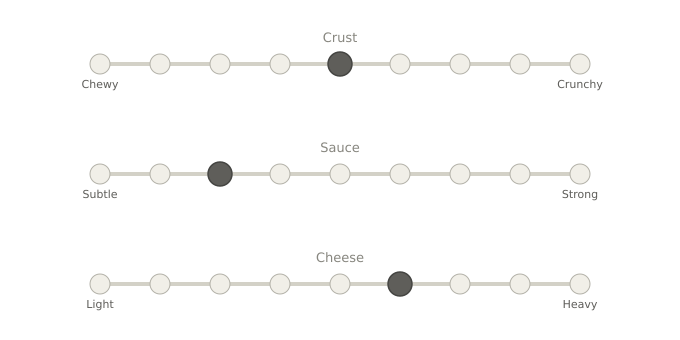
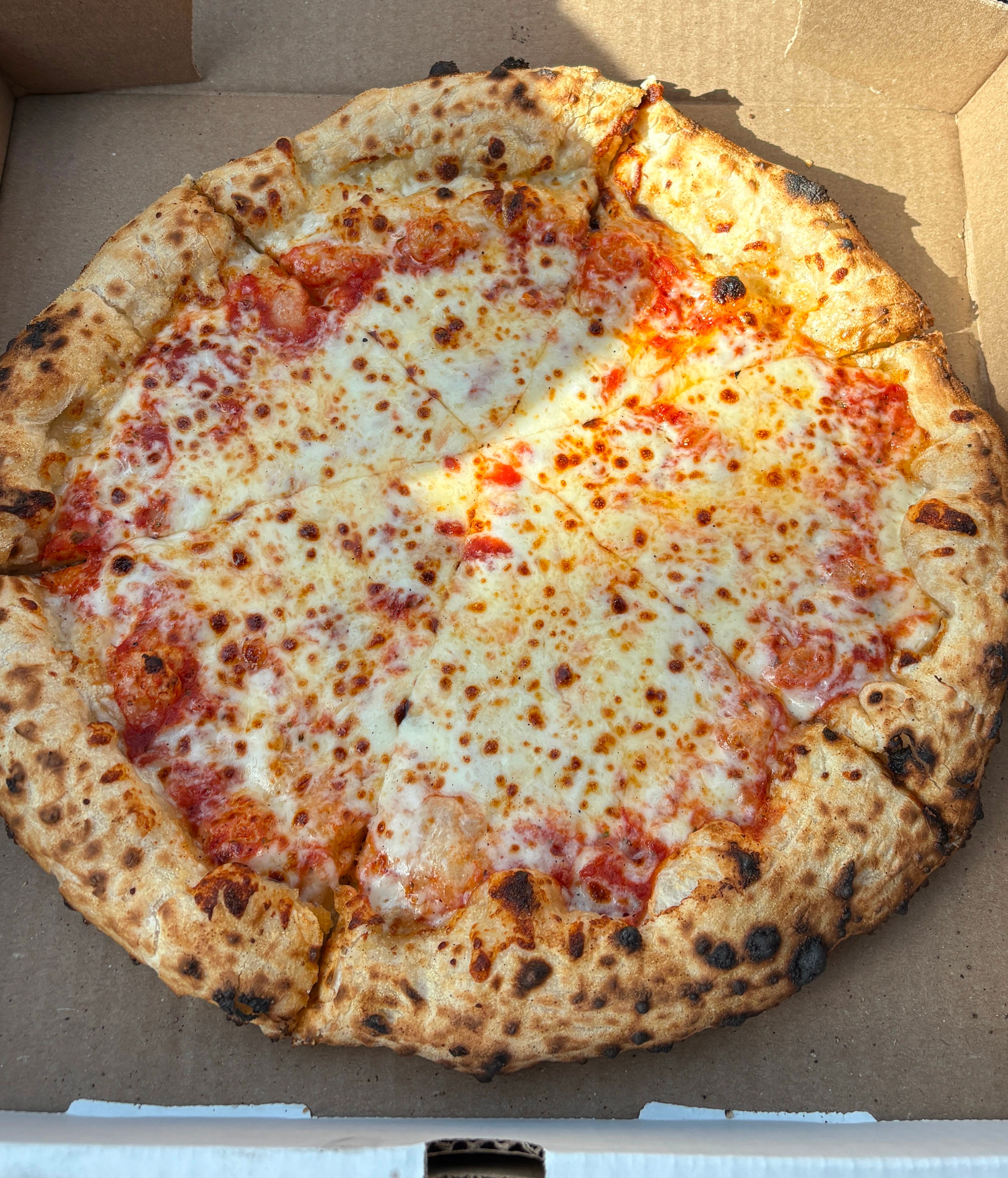
Crust: It’s not crispy at all. There is a little “crisp” at the top layer of the bite experience, but this is squarely on the “chewy” side. In fact, it may be the “chewiest” of all pizzas in Stamford, but my only hesitation in giving it that designation is it is more “fluffy” than chewy. There’s a lot of air in the crust, so it’s not very dense. It’s a light bite experience. Additionally, the crust has a minimal amount of charred spots, so there is that fire-influenced taste you might get from a Sally’s. But considering Sally’s is so crispy – bordering on crunchy – and Coalhouse is not, this is one of the more unique pizzas in the city. I think the other elements are pretty significant to the bite experience, but ultimately there is a lot of crust in a coalhouse pizza and if you don’t like the crust you won’t like the pizzas. Very Chewy.
Sauce: This sauce is easy to overlook because the other two elements are so prominent or unique, but there is a healthy amount of sauce on this pizza. The flavor profile is closer to an acidic savory taste rather than sweet. Coalhouse makes a point to mention their basic pizza is mozzarella “and basil,” and you can understand why they chose to mention a spice that most pizza places would not name directly. The sauce tastes like Basil. There’s probably some other spices in there too – garlic likely – but the Basil flavor is distinct and easy to identify. Slightly Strong.
Cheese: Significantly above average on the cheese application. Potentially the cheesiest pizza that isn’t straight-up Greek style (which is known for more cheese). You’ll get a clear stack of it on your pizza, and it can slide off or get pulled off when you’re biting because there’s so much of it. Some pizzas rely on the cheese to be a conduit for flavor delivered by the sauce, but Coalhouse tastes like cheese. It is a core part of the bite experience and flavor profile. Moderately Heavy.
Overall. Coalhouse reminds me of an old brand from New England called Bertucci’s. Maybe that was just the last time I had Neapolitan style pizza. It’s different from all the more popular styles in the area. Coalhouse leans into uniqueness by offering a crazy number of customized pizzas. The menu has a list of some 30+ different types of pizza. They’re all variations of familiar – and not-so-familiar toppings or sauces – but the point is not a lot of people are ordering plain cheese. There’s a lot to explore here.
Colony Grill
Tavern style.
172 Myrtle Avenue, Stamford, CT 06902. Cove neighborhood.
[I forgot to take a photo]
Primary element: Crust.
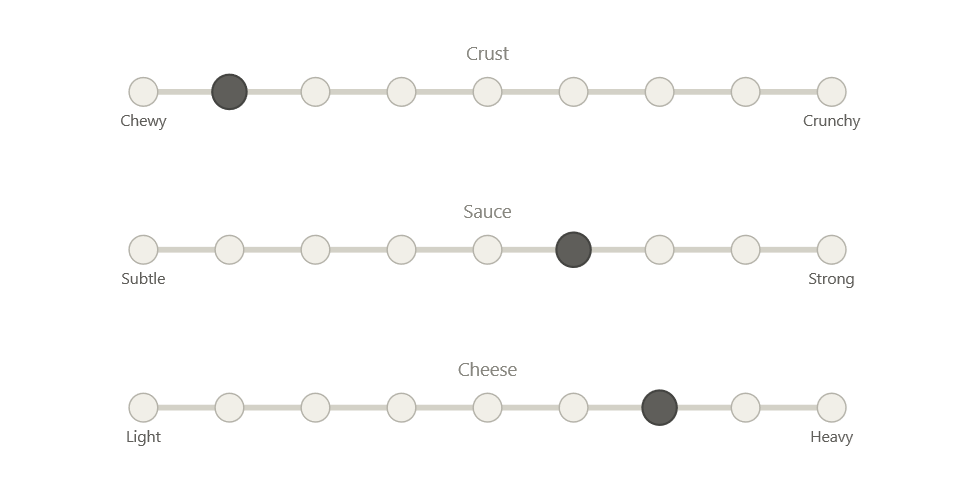
Crust. This is a strange crust to assess. There is no “crunch” sensation in the bite experience (other than the end crust). However, it is a uniquely “firm” dough. The under crust feels compacted into a dense material. It takes slightly more effort to chew through than other crusts. The bite experience is definitely chewy, but it is so firm it feels inappropriate to log it alongside other pizzas that are “soft.” This gets a middle rating because of the clash of sensations. Average.
Sauce. The pizza’s flavor is guided by the sauce, but it is a light influence. The flavor profile is sweet. This may be one of the sweetest tasting sauces in Stamford’s pizza scene, which means it is also a unique flavor compared to other options in town. Moderately Subtle.
Cheese. Essentially nonexistent. It appears porous — as if it has been worn out and is now riddled with holes piercing to the sauce underneath. Sparse.
Overall. Colony Grill originated Stamford’s hot oil pizza (see below for more details). It’s a local legend and not coincidentally the highest-rated pizza place in Stamford (4.7 out of 5 with more than 1,000 reviews). Colony Grill Pizza is a very thin crust pizza defined by its sauce. Served exclusively as personal pies, the thinness ensures pretty much anyone can finish a pizza on their own. Colony Grill’s sauce is unique because it is closer to sweet rather than savory, but the general flavor profile is subtle. Of course, this is an assessment of Colony’s plain cheese pizza, but you’re probably interested in the below assessment of the hot oil pizza.
Hot Oil
Colony Grill is one of the places that pioneered hot oil pizza. You should try it.
What is hot oil pizza? Stamford is the origin of hot oil pizza, and it is arguably the city’s defining culinary cuisine. Originally created at Colony Grill, it has since spread to other pizza places around town. Walk into any pizza place and ask for “hot oil” and they will know what you are talking about (although, not all places offer it).
Colony Grill is credited with creating hot oil pizza, but many people in town compare it to Riko’s.
The assessment for Feather Ruffler’s Definitive Guide to Stamford Pizza is exclusive to plain cheese pizza. With that in mind, the above assessment is for plain cheese. If you are interested in an assessment of hot oil pizza, read below:
Crust. Identical to the cheese pizza experience. Very firm but otherwise chewy. Slightly Chewy.
Sauce. Unsurprisingly, when you add a spicy hot oil to the sauce it immediately becomes the most defining element of the pizza. Everything about the bite experience becomes defined by this hot oil, which has a miraculous ability of redefining the other elements in service to the hot oil. The “heat” of the hotness can vary – likely dictated by the jalapeno peppers that come at the center of the pizza, which can be very hot or somewhat sweet. Dominant.
Cheese. Even less of a focus with the sauce overwhelming the flavor profile. Sparse.
Fairfield Pizza
Neighborhood style.
87 Atlantic Street, Stamford, CT 06901. Downtown neighborhood.
Primary Element: Cheese.
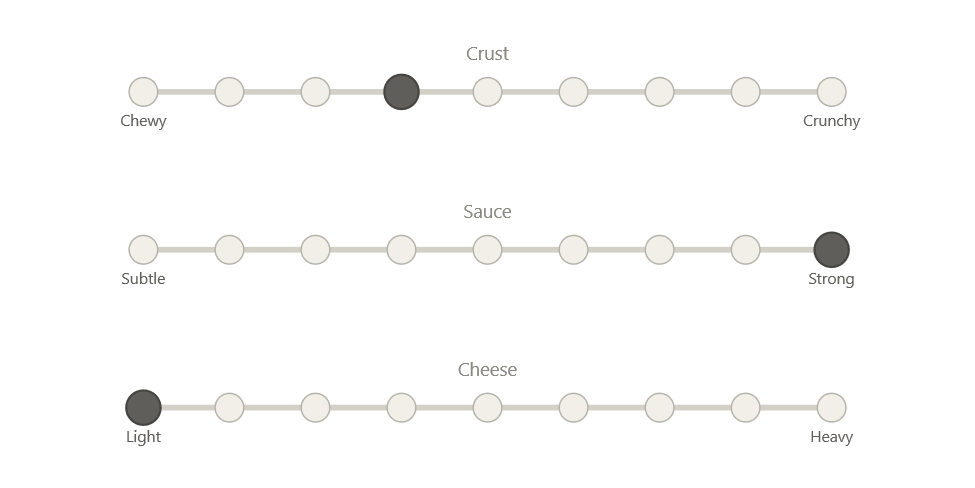
Crust. Very much a chewy crust experience. Of course, the end crust has some crunch, but the majority of the slice is chewy. It blends with the heavy application of cheese so there is not a distinct flavor profile between the crust and the rest of the pizza. Very Chewy.
Sauce. Sauce exists entirely for the function of lubricating the pizza. The sauce has no detectable flavor at all. It is not sweet or savory. The sauce does not influence the bite experience at all, you can’t even tell it is there. Occasionally, you will bite into an herb used for seasoning, but the experience is completely absent of any sauce influence. Absent.
Cheese. The most prominent element of this pizza. The cheese is not heavily seasoned. The bite experience is a soft chewiness that makes it feel like a “comfort” experience. It’s the type of pizza you get when you’re craving something warm and savory. Moderately Heavy.
Overall. Fairfield Pizza could be called “generic pizza.” It doesn’t have a distinct style, or flavor profile. It’s essentially “warm food” which could be exactly what you are looking for under the right circumstances.
Fortina
Neapolitan Style?
120 Washington Boulevard, Stamford, CT 06902. Harbor Point neighborhood.
Primary Element: Crust.
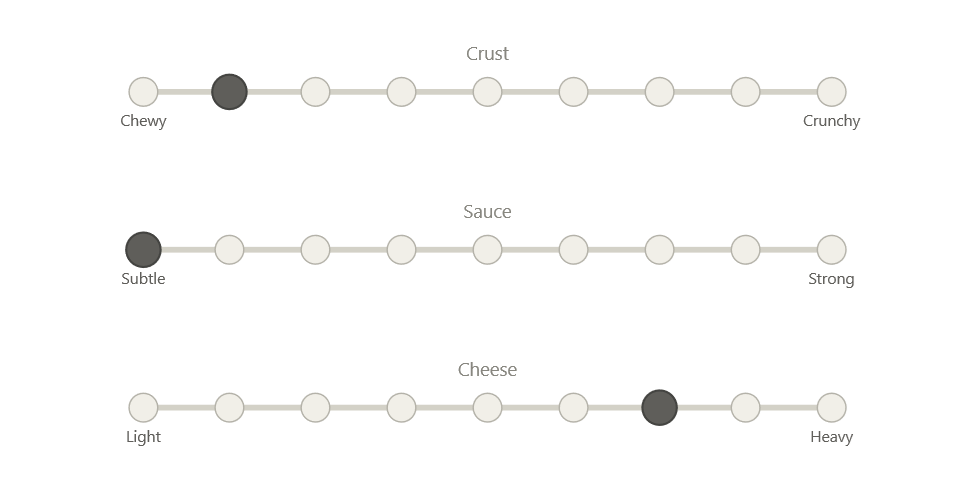
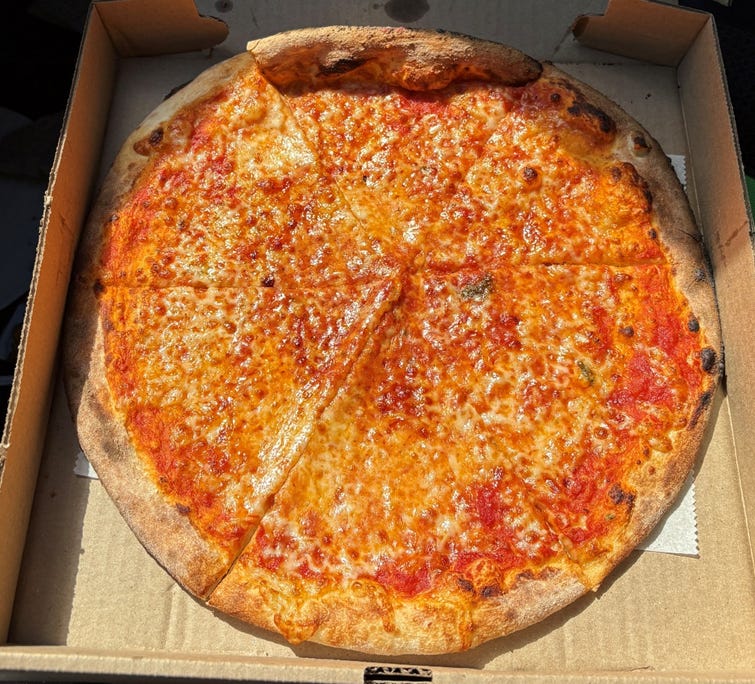
Crust. Fortina’s pizza feels “light” and that’s driven by its crust. It’s a fluffy and chewy crust. Thin enough in the under crust to have no real “crisp” in the bite experience. The end crust has a slight crisp in the bite, but otherwise it is a fluffy and airy dough. Fortina does char its pizza but a very minimal amount. It is enough to get a distinct fire taste on the end crusts, but the under crust is plain white. The pizza does have a powdery bite experience – but again it is the most minimal amount I’ve come across in this list. The fiery char and slight powder elevates the evaluation on what would otherwise be a very chewy crust. Very Chewy.
Sauce. Fortina’s sauce is melded with its cheese, but its flavor profile is primarily sauce. More specifically, it is the Mediterranean spices like oregano and basil leaves. These are unique flavors in the grand scheme of Stamford pizzas, but there is minimal usage of them. The flavor of Fortina’s sauce is very light and subtle. Very Subtle.
Cheese. Fortina’s cheese is melded with its sauce, and the cheese flavor is practically nonexistent. This is already a very thin under crust and the cheese layer is similarly very thin. Sparse.
Overall. Fortina’s pizza feels like a pizza for people who don’t want to feel guilty about getting pizza. It’s very light. No strong flavors in any direction other than the slight char taste of its crust. Fortina does have a number of specialty pizzas with interesting combinations like burrata, chili honey, or jalapenos – but the plain cheese is very much a no-frills pizza.
Frank Pepe Pizzeria
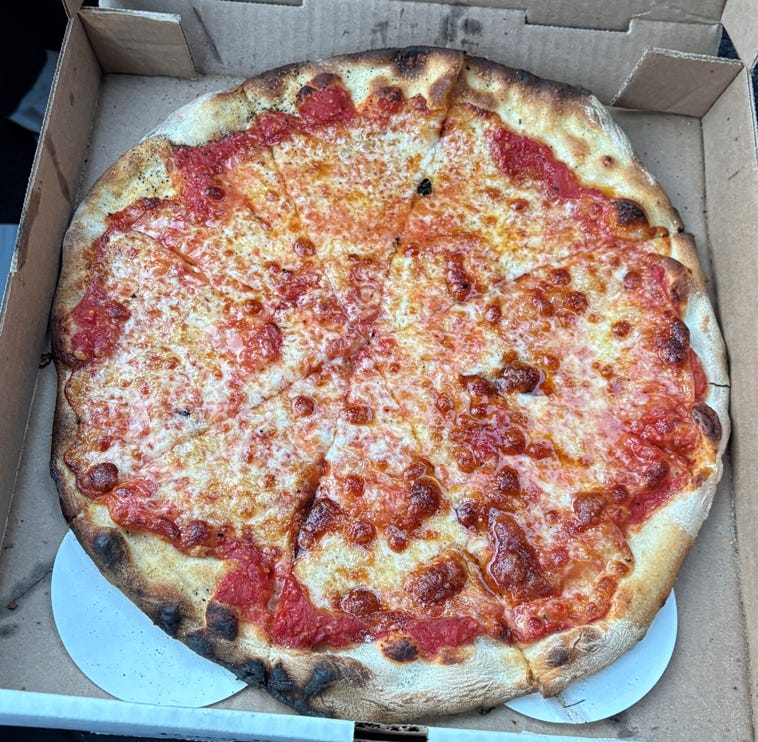
New Haven style.
64 High Ridge Road, Stamford, CT 06905. Midtown (Bulls Head) neighborhood.
Primary element: Crust.
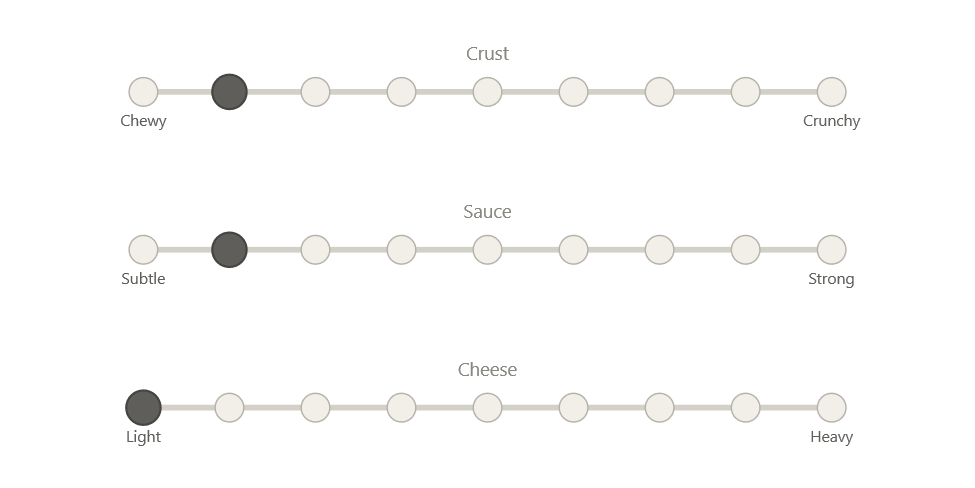
Crust. Definitely on the crunchier side of the spectrum. Frank Pepe’s crust accomplishes what other high-tier pizza places can do with their crust – which is provide a slight “crunch” at the outermost layer of the crust for an otherwise chewy experience. This is common for regional pizzas in New Haven and occasionally New York City. Even with that in mind, I would consider Pepe’s a bit crunchier compared to other similar pies – which is consistent with New Haven’s style of a crisp and charred crust. Moderately Crunchy.
Sauce. Frank Pepe’s has a very present tomato flavor in their pizza. You will occasionally get more olive oil in some bites which compliments the tomato and pecorino cheese nicely. The combined flavors of the tomato, olive oil, and pecorino is very pleasant. I can’t verify this myself, but I would say Frank Pepe’s tastes like a pizza that’s selecting for above average ingredients compared to other pizza places in town. The sauce has a distinct flavor, but it isn’t overpowering or lightly applied. Average.
Cheese. You can order a pie with mozzarella, but it is worth mentioning this is not a default option at Frank Pepe’s. The “standard pie” is a tomato pie with no mozzarella. Instead, there is pecorino cheese – a cheese that looks like tiny balls of cheese that has a bitter taste compared to other typical cheeses for pizza. The pecorino is also present if you order a basic + mozzarella pizza and it is the most distinctive flavor on the pie. Pecorino may be bitter by comparison, but when mixed with the tomato sauce and olive oil it doesn’t create a bitter flavor profile. It is distinct though and really unlike any other pizza option in Stamford. This specific cheese combo is unique, but it is just below the average level of cheese application. Slightly Light.
Overall. The evaluation of the sauce and cheese for Frank Pepe’s may give the impression this is a “middle of the road” pizza, but this is really an example where the sum is more than its parts. It’s a very pleasant flavor profile that feels “light” to eat. It’s not one of those pizzas where you feel you just ate a whole pizza and now it’s rolling in your stomach. I think what stands out for me is I managed to appreciate the charred flavor of the crust – even though I personally do not enjoy charred style crust. That stands out to me because it shows Frank Pepe’s is a little more put together than similar options. My guess is this is related to ingredients and cooking instructions – which would make sense. Frank Pepe’s in Stamford is a real institution. Wait times are incredibly long for both dine-in and take-out. They seem to know what they’re doing.
Unique option. Frank Pepe’s is specifically known for its “White Clam” pizza. This pizza is so distinct from how we rate pizzas that we didn’t include it in this guide. But it is a regional delicacy, and we recommend it if you like the typical Frank Pepe pizza.
Hope Pizza
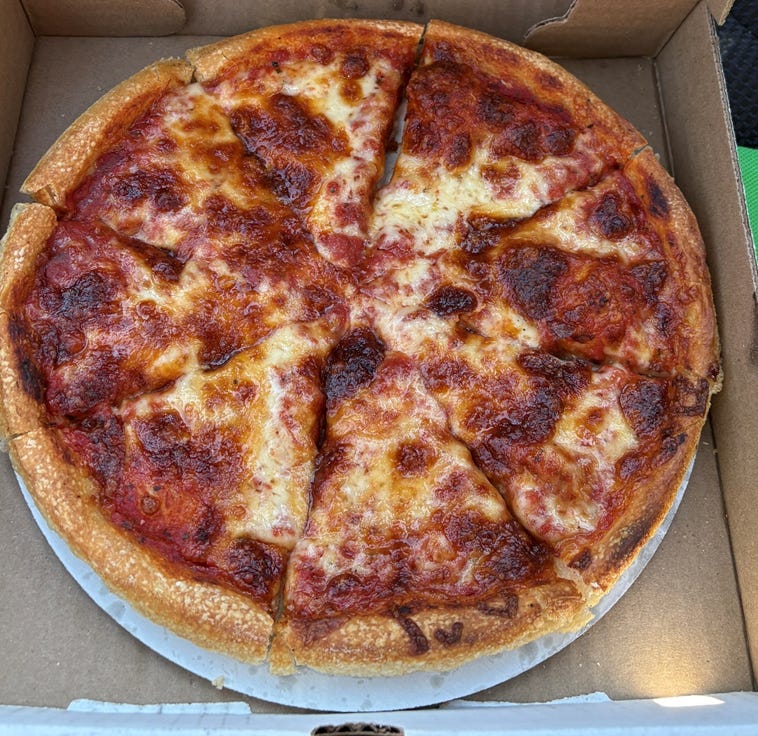
Greek style.
230 Hope Street, Stamford, CT 06906. Glenbrook neighborhood.
Primary Element: Cheese
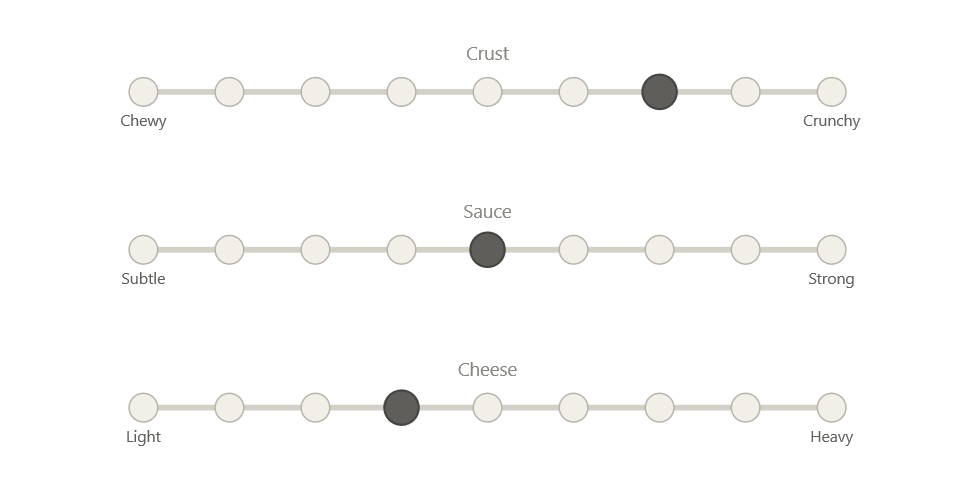
Crust. Hope Street Pizza follows other Greek style pizzas which tend to have “chewy” crust. Hope Street Pizza is unique because their crust tastes more like bread compared to other options in the area. There is a granular consistency to the dough itself which creates a “brittle” bite experience in the crust. I use the word “brittle” to describe how the crust is firm and hard like other crispy crusts – it is not malleable or squishy like some other chewy crusts – but with minimal pressure it collapses in the bite experience. This gives the sensation of a crisp crunch on the end crusts specifically, but this is largely a chewy crust. The bready taste, granular texture, and brittle firmness makes it a bit crunchier than a typical “chewy,” so I’ve moved it across the spectrum in reflection of those unique elements. Moderately Chewy.
Sauce. Somewhere in Hope Street Pizza is a significant portion of spices. It’s not in every bite, because often the tomato sauce for this pizza is subtle. It’s on the savory side (compared to “sweet”) for pizza sauces. Occasionally you will get a burst of flavors from different herbs and spices used in the sauce and applied to the pizza. However, the sauce’s flavor is a mild contribution to the bite experience. Slightly Subtle.
Cheese. Hope Street Pizza is like many Greek style pizzas that put more emphasis on the cheese. There is a hefty amount of cheese on this pizza, enough that you can identify it on sight. The amount of cheese means “cheese” is one of the flavor profiles of the bite experience. This is true for Hope Street Pizza too. The cheese is thick enough to rest on top of the slice, and it can easily slide off with a generous bite or when it’s fresh out of the oven. Moderately Heavy.
Overall. Hope Street Pizza is classic Greek style pizza. It’s a popular neighborhood location and it is tied for the third-highest rated pizza place in Stamford (4.6 out of 5, over 900 reviews). The one thing about Hope Street Pizza is it is fairly inconsistent when it comes to cook duration. I lived down the street from Hope Street Pizza for 3 years and there are times where it’s doughier and light and other times where it is hard and charred. As an average trend, Hope Street tends to be a longer cook than other pizzas – which may or may not be your thing depending on your relationship to crust and the bite experience.
John’s Pizza
Greek style.
162 Grove Street, Stamford, CT 06901. Downtown neighborhood.
Primary Element: Cheese
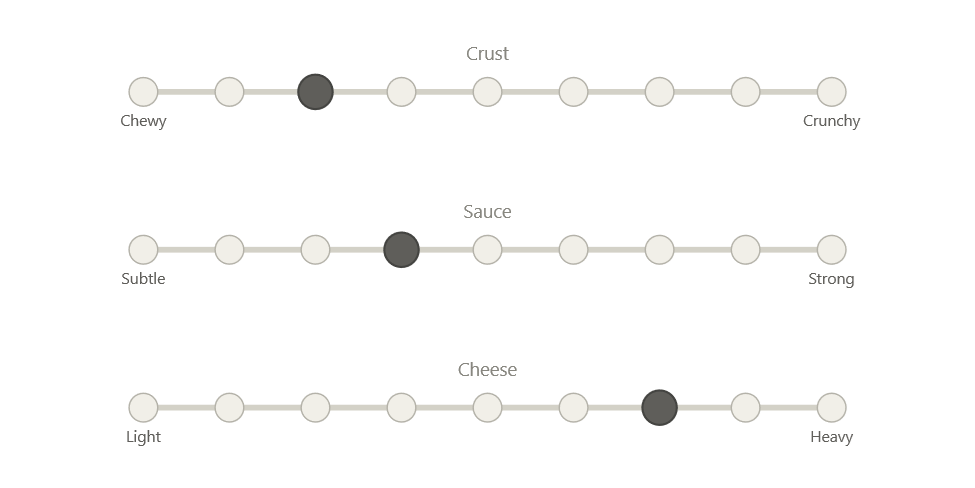
Crust. Like other Greek style pizzas, John’s Pizza has a “brittle” crust. It maintains its shape and form – it’s not malleable or easily squished – but the “crisp” factor is very light in the bite experience. Just a minimal amount of resistance in your bite and it’ll collapse into your mouth. The under crust for John’s is very soft. The exact chewiness can be inconsistent, but at times John’s can be very “doughy.” You could call it a “light cook” as opposed to a “well done” cook you can get in some pizza places in town. The flavor of the crust is very bready. Very Chewy.
Sauce. John’s Pizza’s sauce is savory, but subtle. It’s not sweet and doesn’t have too many herbs or spices – although you will see an occasional basil leaf in the sauce. When I isolated the sauce for its own flavor inspection, it had its own savory flavor, but it wasn’t a powerful taste. The sauce may have more impact if it wasn’t crowded out so much by the cheese. Slightly Subtle.
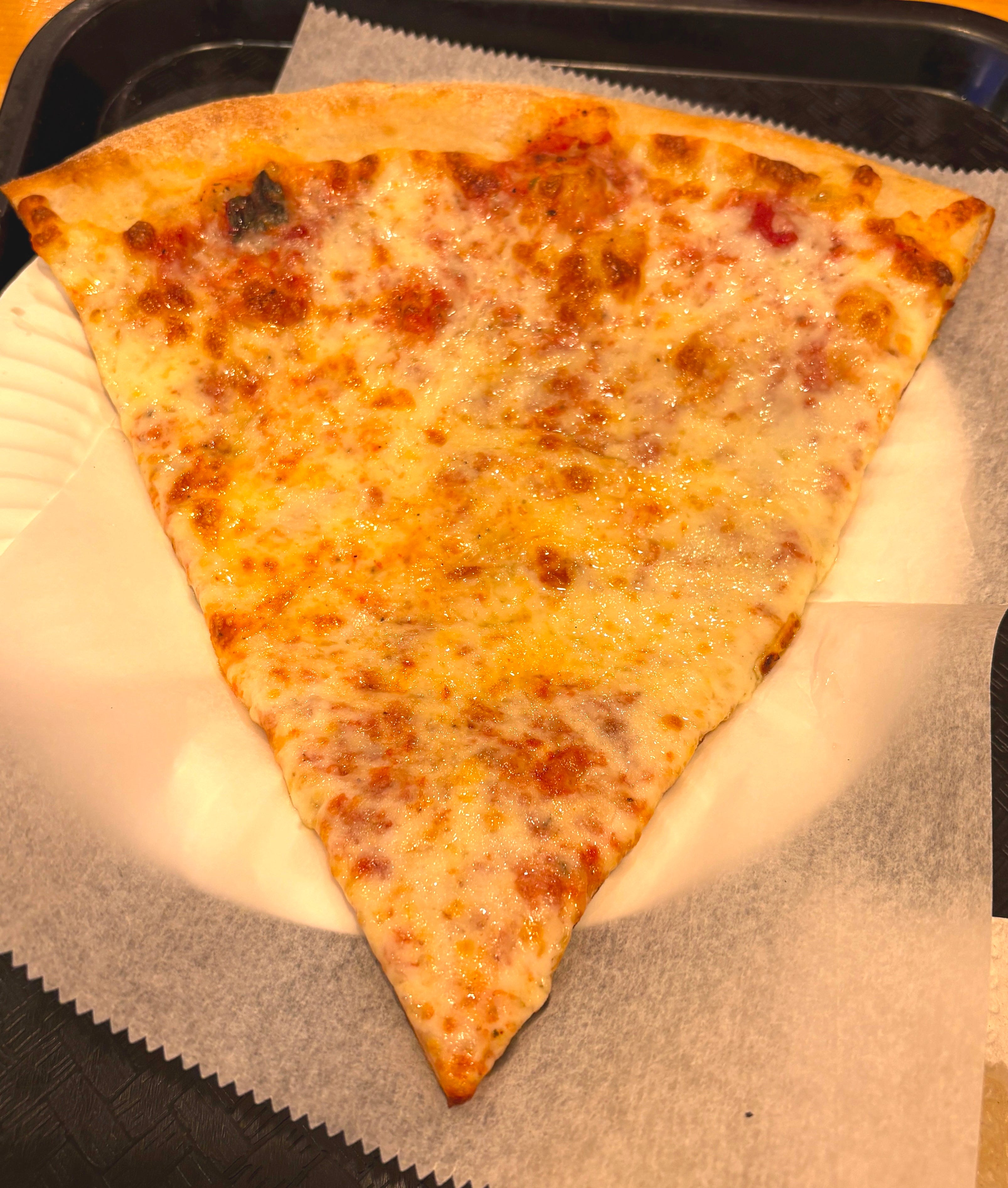
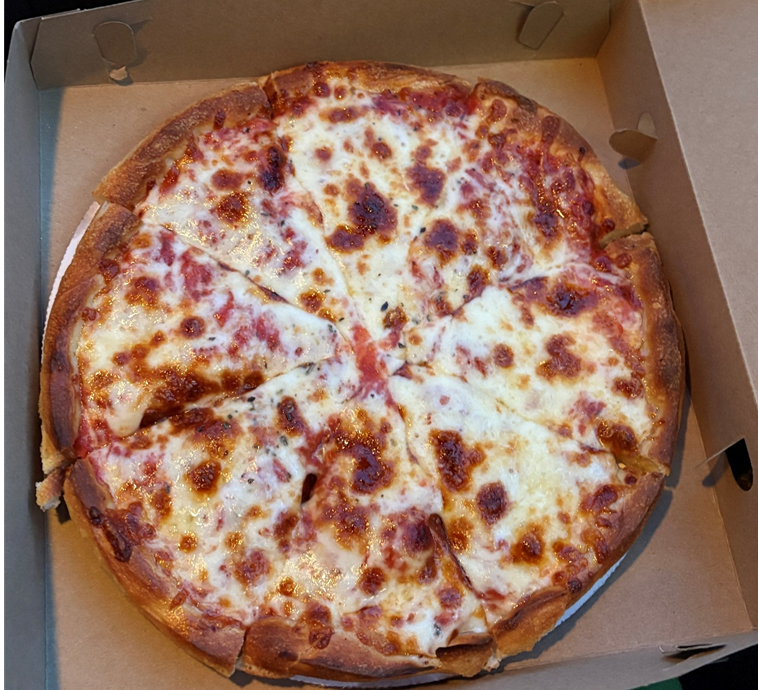
Cheese. John’s Pizza is the cheesiest pizza out of all pizzas in Stamford. The amount of cheese can be inconsistent, but on average it is a significant portion of cheese – enough to define the entire pizza. Cheese influences both the bite experience and the flavor profile. The “flavor” of John’s Pizza is cheese. There’s enough of it to get a variety of deeper and lighter cooks (evident in the brown spots you can see in the photo) which creates a varied flavor profile which you really won’t get outside of Greek style pizza. The texture of the bite is also dominated by cheese. Most of what you’re eating is cheese, so there is a consistent chewiness specifically because there is so much cheese. If your standard for pizza is “as much cheese as possible” this is the peak for Stamford pizzas. Loaded.
Overall. John’s Pizza is the polar extreme of a Greek style pizza. If all the other pizza styles focus on either crust or sauce, this is the one pizza place in town that focuses on cheese. Whether it’s “good” or not depends solely on how you feel about eating a bunch of warm cheese on an edible plate. It’s not for everybody, but it is unique and fulfills that desire for those who want it.
John the Baker
New York style.
Primary Element: Crust
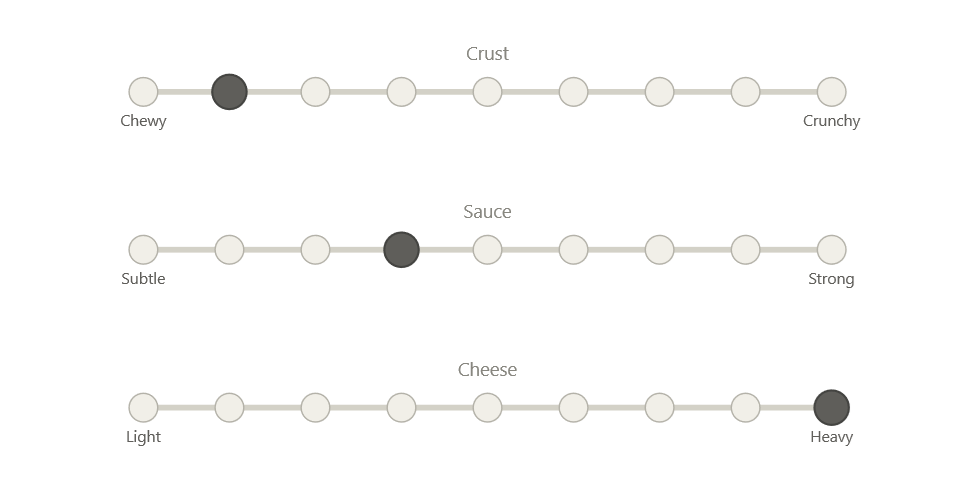
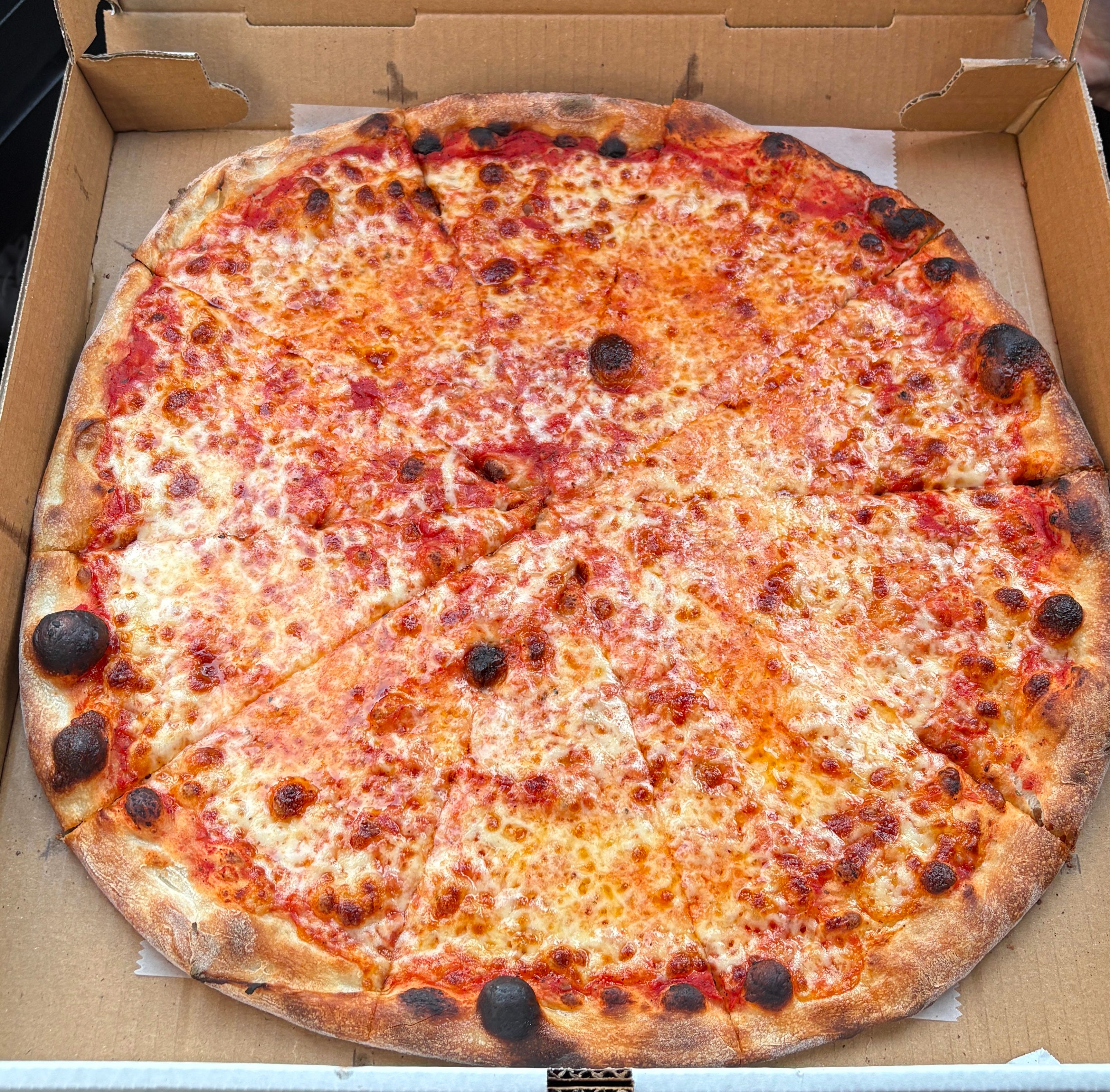
Crust. John the Baker’s crust has a distinctive crunch with slight charring for flavor. The under crust has a dark brown color with minimal black spots. The top side of the pizza also has occasional charring on the end crust. The visual is deceptive, because the pizza is not defined by a “char” flavor. It’s not unlike New York style pizzas with a distinctive crunch outer layer for an otherwise chewy crust – but John the Baker’s crust leans more toward crunchy in general. I will say — as someone who doesn’t really like the char flavor — this is more subtle that other similar crusts. 7/9. Moderately crunchy.
Sauce. John the Baker’s sauce melds with the cheese with little leftover. I wasn’t able to isolate the sauce to taste separately because beneath the cheese there is barely any left. The under crust’s top side is wet and hydrated, so the sauce is clearly serving a purpose in the cook process even if it is not present when eaten. The bite experience is not dry, but you don’t get the burst of sauce flavor that you get with some other similar pizzas. 1/9 Absent.
Cheese. John the Baker’s cheese is a very simple flavor profile. There is a light amount of salt seasoning, but otherwise it is primarily the flavor of the cooked cheese. It’s not a pizza with a lot of herbs or spices added for flavor. In terms of volume, there’s more cheese on this pizza compared to other similar pies. 7/9 Moderately heavy.
Overall. Unsurprisingly the establishment with “baker” in the name is most notable for how it cooks its dough. It veers toward the crunchier “fire-kissed” flavors you get from New Haven style pizza, but remains firmly a New York style slice. One thing I will note about John the Baker is it has an inconvenient location. It sits at the heart of one of the transportation nightmares of Stamford — Bulls Head. If you live south of John the Baker you’ll need to plan how to turn into its comically tiny parking lot.
Lucy’s Pizza
Neighborhood style.
157 Stillwater Avenue, Stamford, CT 06902. West Side neighborhood.
Primary Element: Cheese
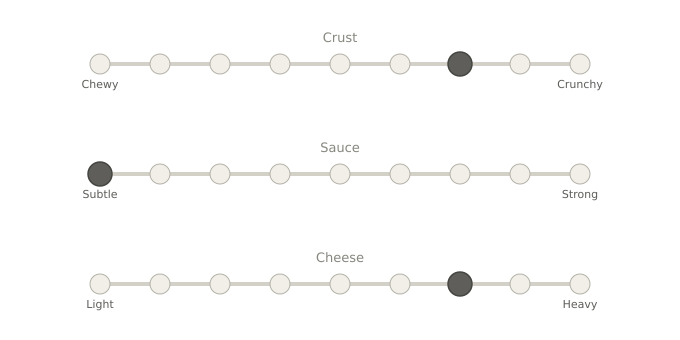
Crust. Lucy’s Pizza has the chewiest crust in the city. Even the end crust — which is typically the crispiest part of the pizza – barely registers a “crunch” in the bite experience. The crust is more doughy than “brittle.” The end crust can be squishy and malleable. There is a slight crunch on the outermost layer of the crust, but the bite experience is very soft. Doughy.
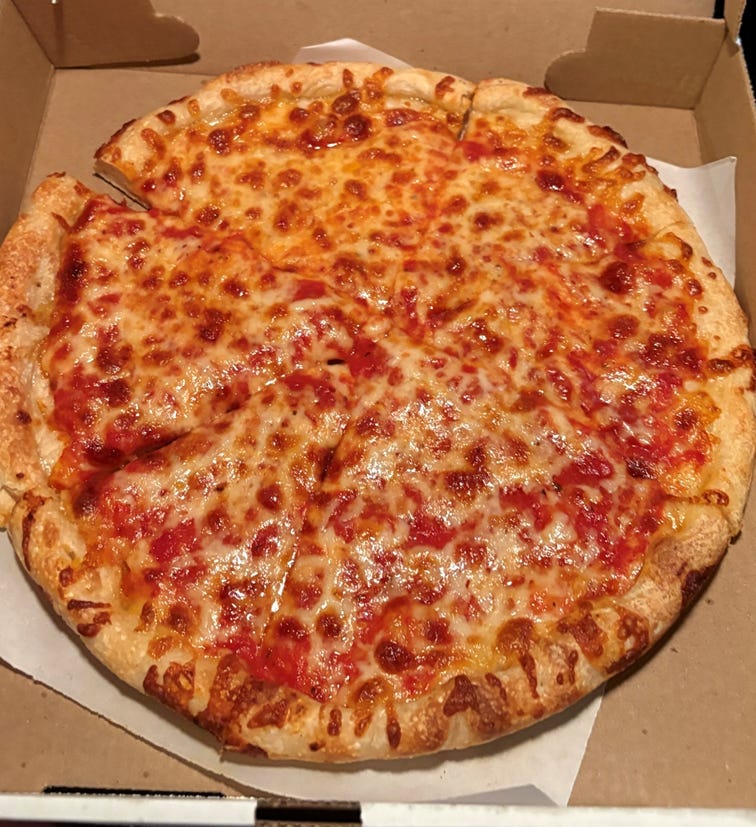
Sauce. Lucy Pizza’s sauce is similar in flavor profile to Greek style pizzas, but there’s more of it. The pizza itself looks redder in photos. You can easily peel the cheese from the sauce. It doesn’t meld together like with some pizzas. When you isolate the sauce from the cheese and crust, there’s a lot to see! The bite experience is heavily influenced by the presence of the sauce – giving it a little more of a meatier savory flavor profile compared to similar style pizzas. With that in mind, the overall impact of the sauce is mild. It’s not distinctly flavorful compared to the other elements. All three of the elements work together in similar measure. Average.
Cheese. Lucy’s Pizza is a bit hard to categorize, but its distinction from other pizzas in the area is the above average amount of cheese. I am close to considering it “Greek style” — specifically because of the amount of cheese — but its biggest difference from that style is it has more sauce. Moderately Heavy.
Overall. Lucy’s Pizza is close to being in the “Greek style” category of pizza, but the presence of significantly more sauce and substantially doughier crust makes it unique. I would describe the bite experience as “comfy.”
Mario the Baker
Neighborhood style.
864 High Ridge Road, Stamford, CT 06905.
Primary Element: Crust.
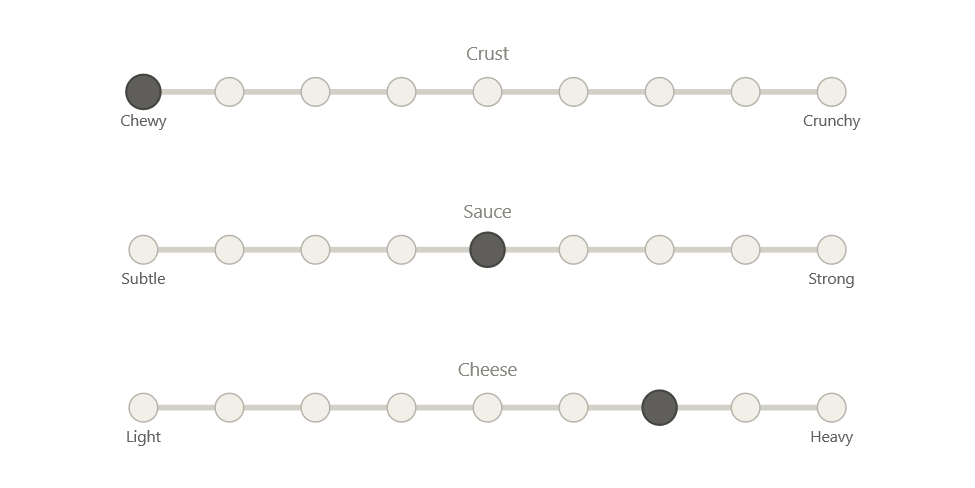
Crust. Mario the Baker has a crispy end crust and under crust. The texture is hard. The under crust is intentionally charred with the fire “char” taste acting as a significant influence for the bite experience. The under crust is thin, but the end crust is thick enough to have a bready taste. The crispy bite experience, charred taste, and thick breadiness makes it one of the crispiest bite experiences in the city. Very Crunchy.
Sauce. Mario the Baker’s sauce melds with the cheese, so there is very little sauce present in the bite experience. When you isolate the sauce, it is primarily a tomato taste with an above average acidity flavor profile – but it’s subtle and not overwhelming. Very Subtle.
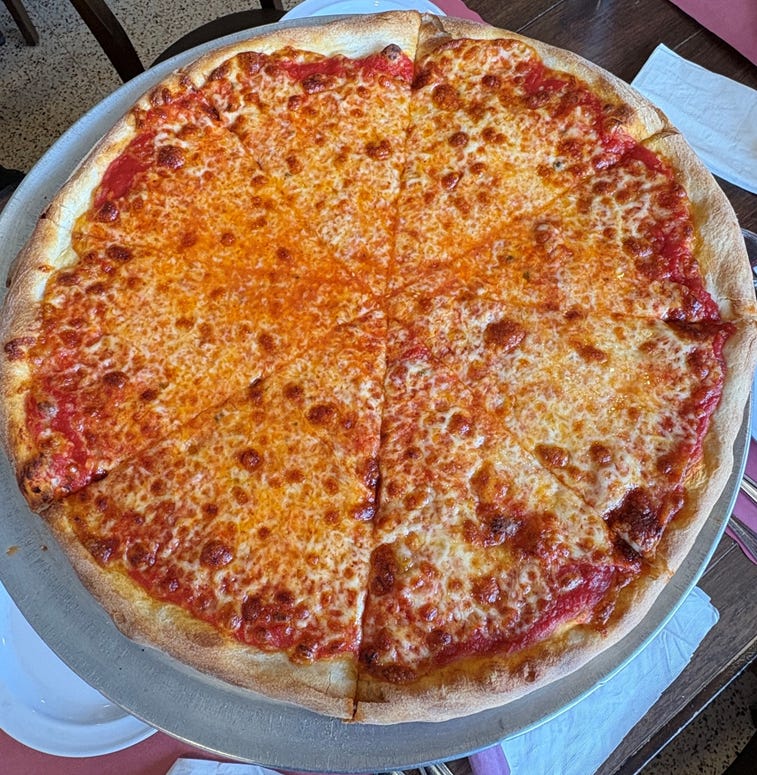
Cheese. Mario the Baker’s pizza has the cheese meld with the sauce. There is an above average amount of cheese, and it can easily slide off the slice. When you get the pizza hot the cheese’s consistency is drippy. It’s easy for it to pool to different sides and drip off the pizza itself. Slightly Heavy.
Overall. The liquid nature of the cheese may present Mario the Baker as a sauce-oriented pizza, but the flavor profile is pretty traditional. The most unique thing about Mario the Baker is it veers into a very crunchy rating because of the hard texture and charred flavor in the bite experience.
Nick’s Pizza
New York style.
522 Glenbrook Road, Stamford, CT 06906. Glenbrook neighborhood.
Primary Element: Crust.
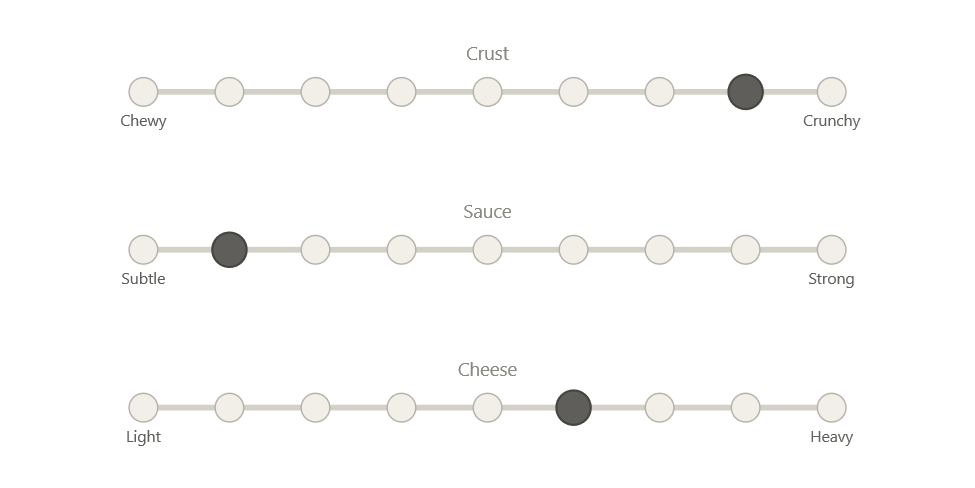
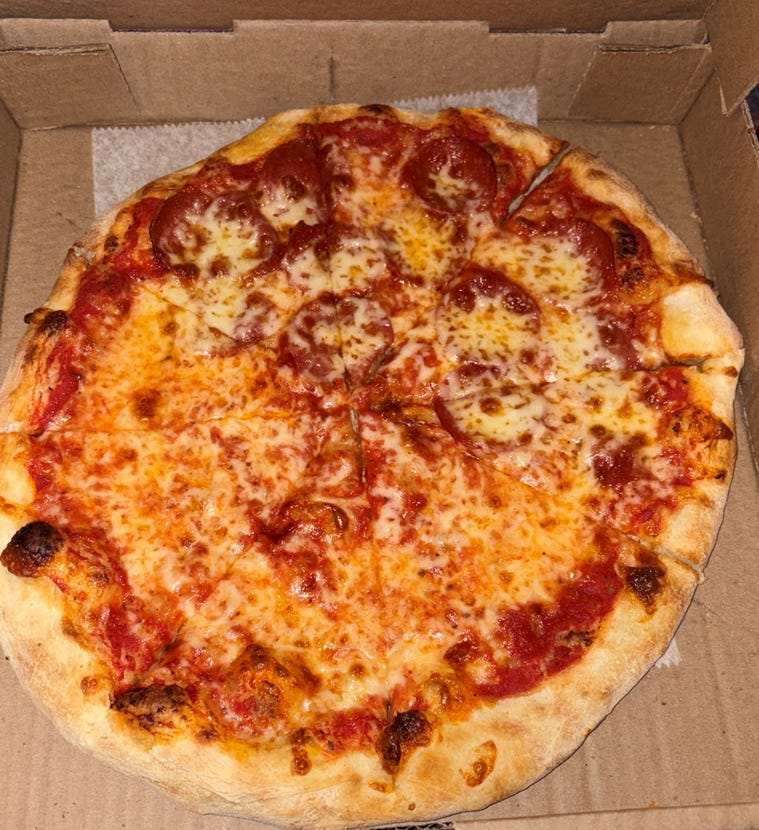
Crust. Nick’s Pizza crust has a very slight crunch for an otherwise soft crust. Every single bite has the definition “New York style” bite experience where the outermost layer of the crust has a distinctive crunch, followed by a very pleasant chewiness. While this is the standard expectation for New York style, Nick’s Pizza executes on its chosen style very competently. It is for this reason the crust is considered the primary element. Every bite in the experience is defined by that slight crunch followed by a chewy crust. Slightly Crunchy.
Sauce. Nick’s Pizza Sauce is savory and feels punchy. The sauce has an obvious influence on the flavor the pizza. You could call it acidic but not grating or irritating. Sauce is heavily applied, each bite feels “wet.” Moderately Strong.
Cheese. Cheese is just slightly below average in terms of application. Cheese is not the focus of the pizza. Average.
Overall. Nick’s is a classic “New York style” pizza but executed better than most other similar pizzas in the area.
Pappas Pizza
Greek style.
201 Main Street, Stamford, CT 06901. Downtown neighborhood.
[I forgot to take a photo]
Primary Element: Cheese.
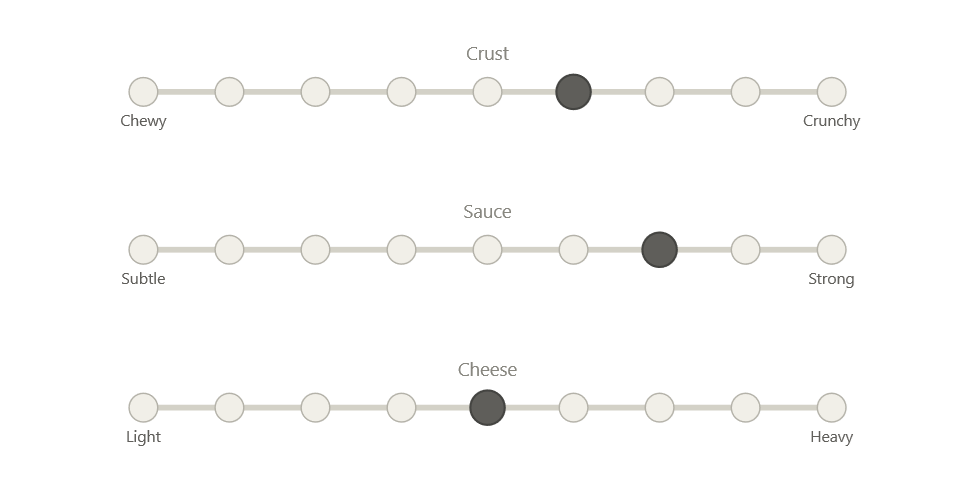
Crust. Pappas’ Pizza is “Greek style”, but it is unique because it is a more deeply cooked crust than other options. The under crust has a slight “crisp” in the bite experience and the end crust is prominent in its crispiness. Of the other Greek style pizzas Pappas has the crispiest end crust, but it is still faithful to the Greek style approach to crust. This is still a very chewy crust that melds with the rest of the flavor. Moderately Chewy.
Sauce. Pappas’ Sauce melds with the cheese, but if you isolate it from the crust and cheese there is minimal flavor and substance of the sauce. You can barely see it on the pie itself, and the flavor profile is primarily tomato and “savory” influences – as seen with similar Greek style pizzas. Very Subtle.
Cheese. Pappas’ Pizza is a distinctly “Greek Style” pizza, where the cheese is the most prominent element of the pizza. There is a thick amount of cheese – enough to be cooked at different amounts. The flavor profile of the bite experience is varied between lightly cooked – and deeply cooked – cheese on the pizza. In general, the flavor profile is defined by the cheese. The light amount of sauce melds with the cheese to create the flavor profile for the pizza. Moderately Heavy.
Overall. The most unique thing about Pappas Pizza is it is the only “Greek Style” pizza that offers hot oil. If you prefer a heavy cheese pizza – which is typical for Greek style – but still want to try the “hot oil” staple of Stamford… this is really your only option.
Pellicci’s
Neighborhood style.
96 Stillwater Avenue, Stamford, CT 06902. West Side neighborhood.
Primary Element: Crust
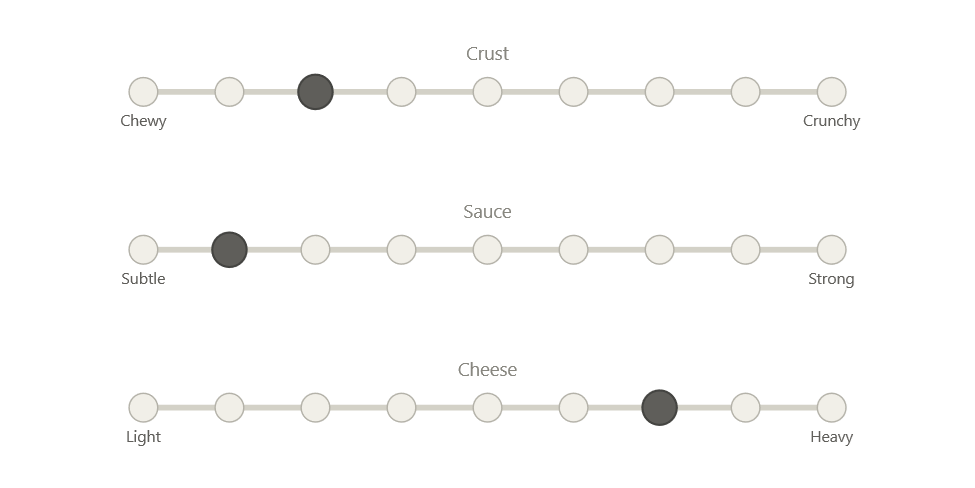
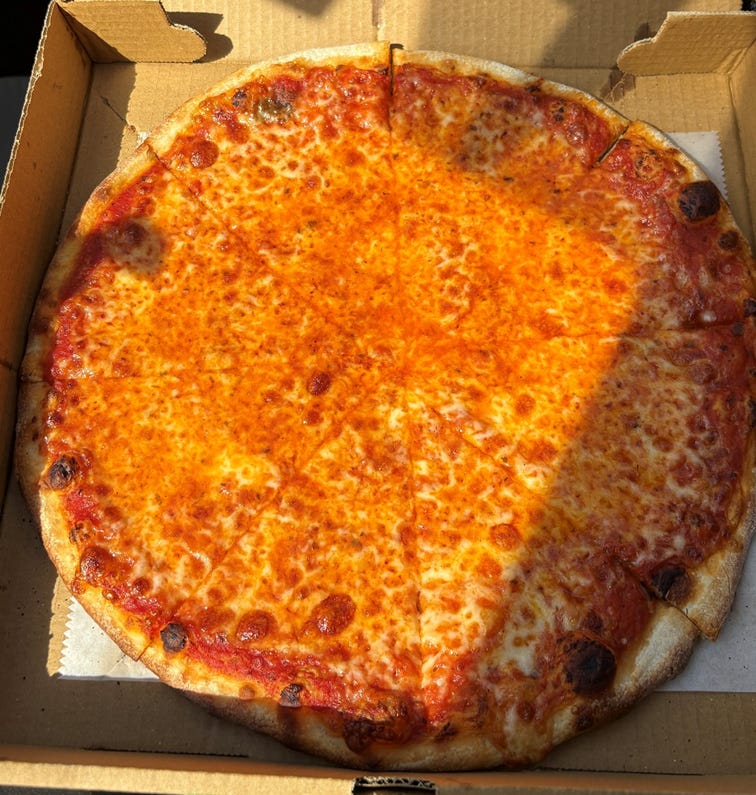
Crust. Pellicci’s crust is most similar to the “fire cooked” crispy crust unique to New Haven style. The crust has charred spots that give a “fire” taste to different spots. It also has the grainy crust experience, but it doesn’t go all the way with powder residue. As far as I can tell, this is the only pizza place in Stamford that has this style of crust without being a New Haven based chain with a local location. At the same time, Pellicci’s crust is not as deeply cooked as similar New Haven pizzas. It’s certainly a deeper cook than the average pizza place in town, but not the extreme you can find elsewhere. Moderately Crunchy.
Sauce. Pellicci’s sauce has a lot of influence on the bite experience of its pizza because of the flavor profile. It’s mostly a tomato taste – rather than spices or herbs – and I think it tastes “fresher.” It may be higher quality ingredients, or potentially a different ratio of tomatoes to other liquids in the creation of the sauce that make it taste more refreshing. It’s a mild flavor, but distinct from the cheese. The pizza also has an above average amount of oil – enough you can see it on the pie. Average.
Cheese. Pellicci’s cheese melts into its sauce. When you isolate the cheese from the sauce, it is clear the cheese has more influence from spices. The mixture is unique, so while it is easy to detect garlic there is likely a variety of other flavors mixed into the pizza’s cheese. Average.
Overall. Pellicci’s pizza is somewhat incidental to its establishment. This is a very old and well-known Italian restaurant with an indoor décor that might be appropriate for celebrating an anniversary. The history makes it a Stamford classic, and its pizza is a unique option compared to all other options. The fire cooked crust makes it closer to the New Haven style pizzas in the area, but it’s got its own level of cook and combination of flavors.
Planet Pizza
It’s pizza!
Primary Element: Crust.
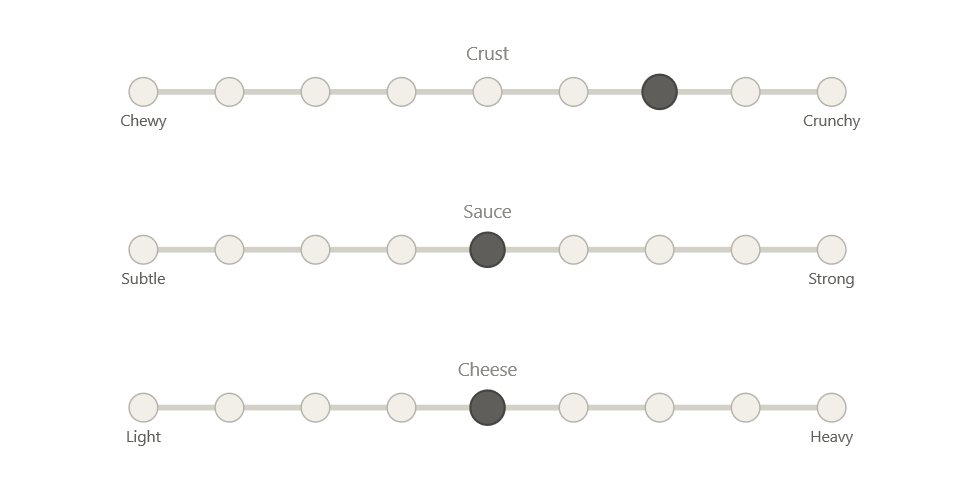
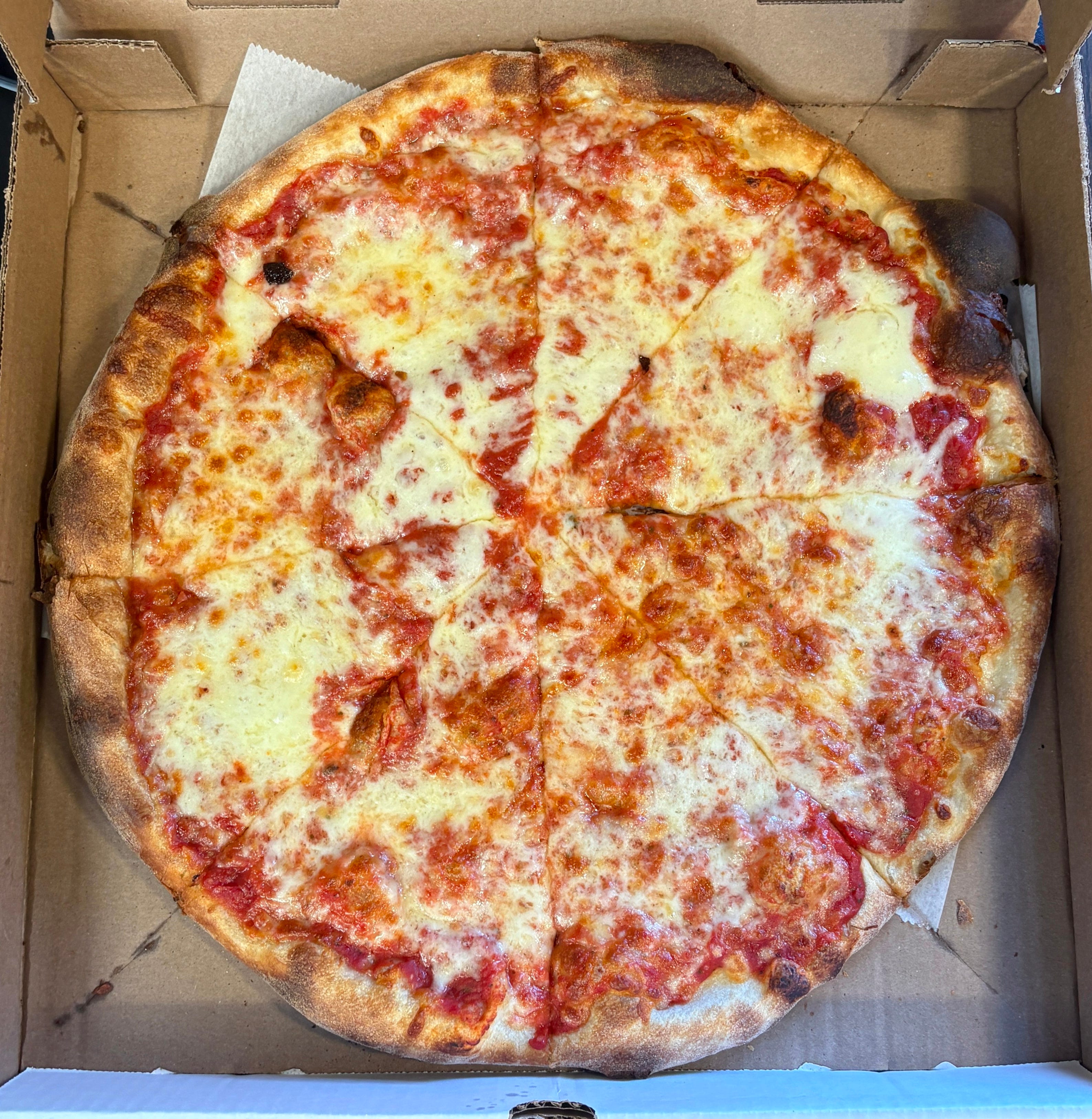
Crust. Planet Pizza’s crust is an unusual mix of both ends of the spectrum. The under crust is chewy. There isn’t even the slight crunch in the bite experience for the outer most layer. However, the crust is defined by a charred flavor profile. The end crust is notably influenced by the charred spots. For the pie I got in this review it was deeply charred – most of the pie’s under crust had black spots or shading. Other times, it isn’t always that charred. The “fiery” taste at the end is enough to say it belongs toward the crunchy side of the spectrum, but the chewiness of the under crust — which is most of the pizza — weighs it closer to chewy. The result is just above average, but it is the result of heavier weights in either direction. 6/9 Moderately Crunchy.
Sauce. Planet Pizza’s sauce is wet. Wet like water. The flavor is closer to that comparison too. There is ample tomato sauce on the pizza – enough to think it may be the dominant flavor – but it is a very subtle flavor. The presence of spices like garlic or oregano was infrequent. That was not always the case. Sometimes you’ll get a bite with a burst of flavor. Mostly the sauce is functional rather than flavor. Even for a sauce that is “just tomato” it is very subtle. 2/9 Very Subtle.
Cheese. Planet Pizza’s cheese is another combination of both sides of the spectrum. Some slices have cheese caked on. You can see the pure white color in the cheese that comes from layers of it stacked in one spot so it isn’t influenced by the red sauce underneath or a bubble emerging from the under crust. Other times it is scattered and reveals the sea of sauce underneath. Overall it is above average, but again the inconsistency makes it hard to rate further down the spectrum. 6/9 Moderately Heavy.
Overall. Planet Pizza is the most inconsistent pizza in the city. Not across visits — I only went twice. Within the confines of the pie it is inconsistent. The end crust is crunchy and has the fire taste from charred spots, but the under crust is about as chewy as some of the “doughy” items on this list. The sauce is plentiful but doesn’t have much flavor. The cheese can be high volume, but other times it is more sparse. The most consistent flavor profile is the charred taste at the end crust mixed with the wetness of the plentiful sauce. Those two elements bring it close to other pizza styles – like a Sally’s or Sorrento’s – but the approach is different.
Quartiere
Neapolitan style.
51 Bank Street, Stamford, CT 06901. Downtown neighborhood.
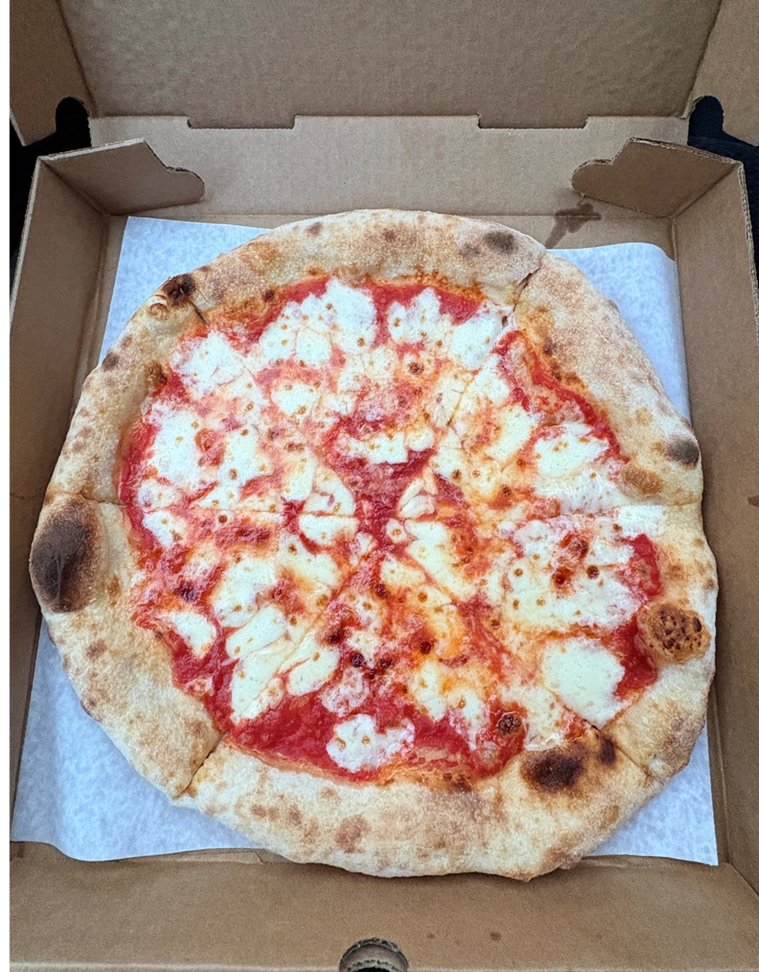
Primary Element: Sauce.
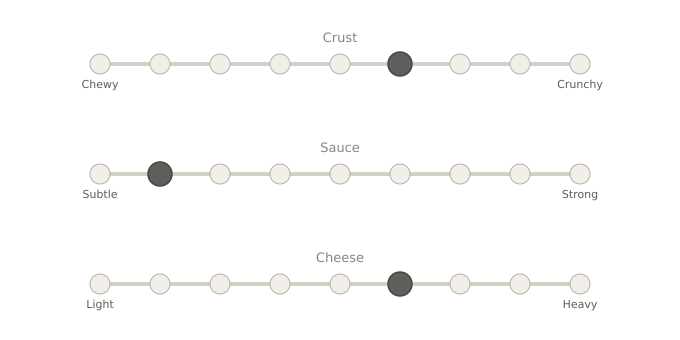
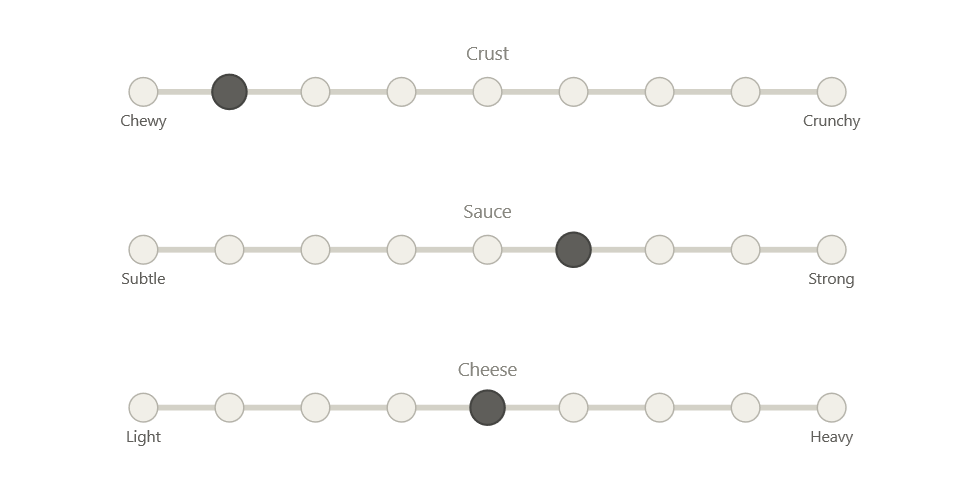
Crust. Quartiere’s crust is doughy. It’s undoubtedly chewy and lacks any perceivable crisp in the bite experience at all. However, it does have light charring for flavor and a tiny amount of flour residue to create a very slight fire taste. It’s possible this crust is just as chewy in texture and consistency as others – with an airy end crust and overall doughy flavor – but the fire influenced flavors bump it up just a tad. Very Chewy.
Sauce. Quartiere’s sauce is the classic crushed tomato sauce you’ll get from Neapolitan style pizza, but it is unique by focusing on the sauce. This is one of those pizzas where there are spots of cheese rather than a whole layer of cheese across the entire pie. The red sauce fills in the gaps in between which naturally elevates the prominence of the sauce. Unlike other Neapolitan style pizzas in Stamford, Quartiere’s sauce is not full of herbs and spices. It’s a tomato flavor profile that is slightly acidic and more mild in flavor than distinctly savory or sweet. The sauce is most prominent because of how it contributes to the bite experience. It’s juicy with each bite, even when you’re including the crust and even when it’s cooled down a few minutes later. Slightly Strong.
Cheese. Quartiere’s cheese is in spots rather than a full layer. This might give the expectation the cheese is not very prominent, but it is a healthy amount of cheese. It influences the bite experience both with texture (chewy) and flavor (tastes like high quality mozzarella). The establishment claims they add pecorino to the cheese, but I didn’t taste anything other than basic mozzarella. Average.
Overall. Quartiere may have the look and style of Neapolitan, but it’s trimmed back compared to other options. It focuses on classic flavors like straight tomato and cheese. The business also typically offers bay leaves as a garnish for its margherita pizza, but I chose not to include that for our assessment.
Remo’s
New York style.
35 Bedford Street, Stamford, CT 06901. Downtown neighborhood.
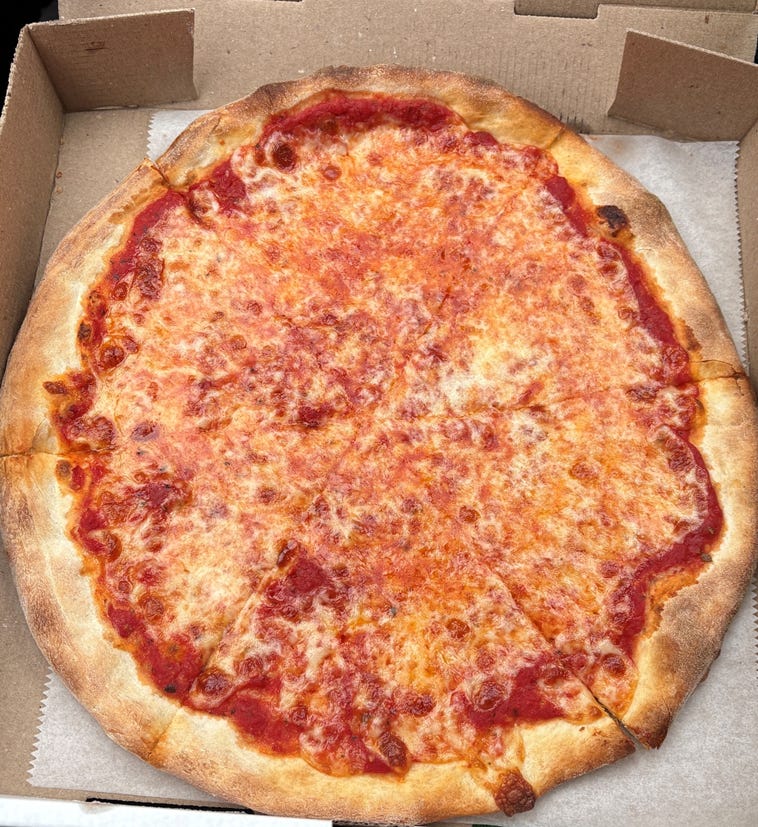
Primary Element: Sauce.
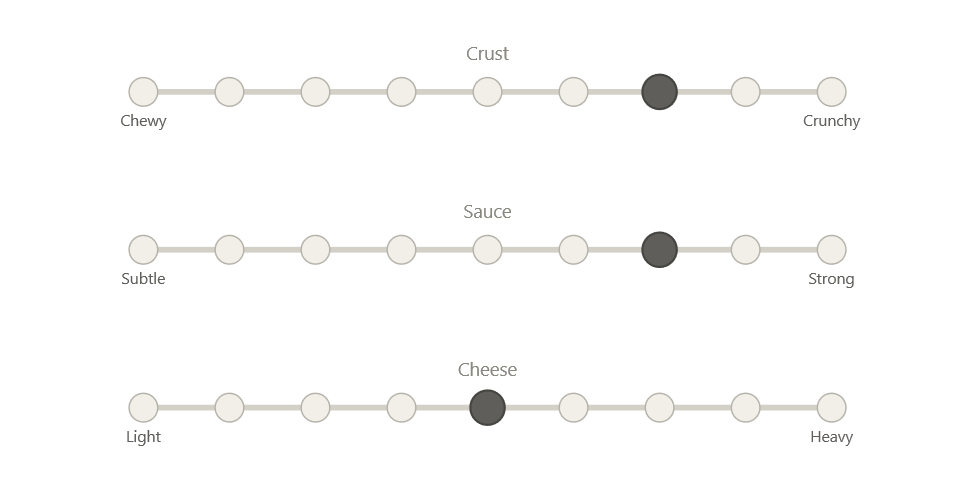
Crust: New York style crust has a very thin layer of distinct “crunch” in an otherwise chewy bite experience. Remo’s crust is crispier than other similar pizzas. The end crusts can have a “crack” bite experience that can occasionally be dryer than other pizzas. Remo’s is not a charred crust, but it can sometimes verge close to that style for the end crust. Moderately Crunchy.
Sauce: Remo’s Pizzeria has a juicy tomato sauce. The bite experience is focused on the wetness of each bite — flavored with a combination of spices that certainly includes garlic and potentially some green spice/herb like basil. This is a pretty classic flavor profile for a New York style pizza. Moderately Strong.
Cheese: New York style pizza has a decent amount of cheese and Remo’s is no exception. The bite experience suggests the cheese is seasoned with spices in addition to the sauce, but I’m not confident. It could be a mix of both. There is a cooperation of flavors between the two elements – evident by the fact the cheese clings to the crust more so than other pizzas. Average.
Overall. Remo’s Pizzeria has a reputation of a crowd pleaser. If you go to a random event hosted somewhere downtown there is a high likelihood the catering is Remo’s pizza. Remo’s offers a classic margarita and “New York style.” This is an assessment of the New York style, which appears to be the more popular of the two options.
Unique option. Remo’s also has a “classic margherita” pizza, which is more sauce-based than the New York style pizza. It has a lighter flavor profile and crust. I may evaluate it at a later date, but it is less popular than the New York style.
Riko’s
Tavern style.
886 Hope Street, Stamford, CT 06907. Springdale neighborhood.1
2010 W Main Street, Stamford, CT 06902. West Side neighborhood.
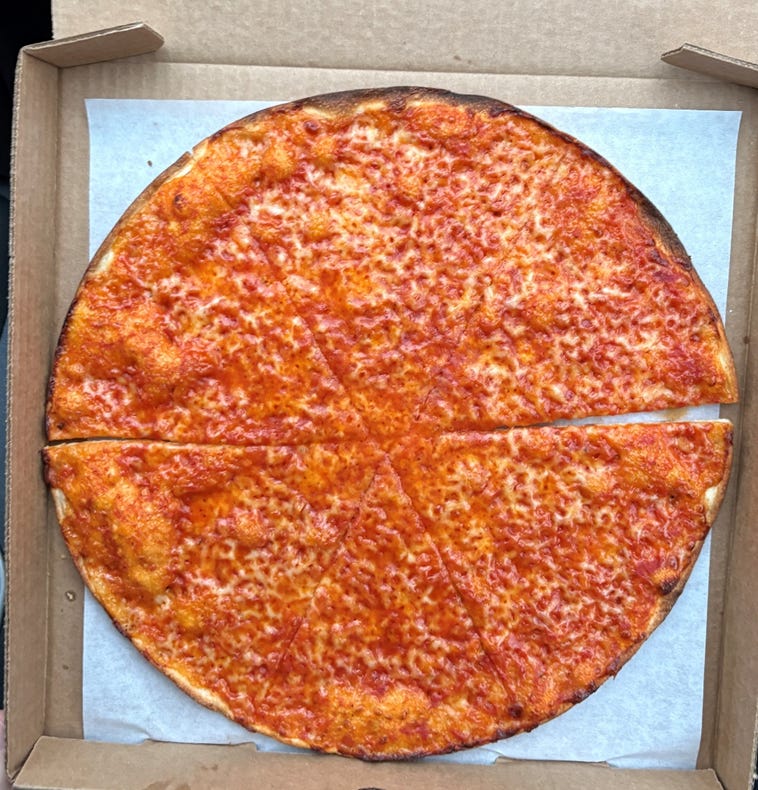
Primary element: Crust.
Crust. Riko’s has a similar cracker-like look as Colony Grill, but it has a crispier bite experience. The under crust is on the chewier side. It is not “dense” like Colony Grill. The main point of distinction between Riko’s and other pizzas is its thinner, personal-sized pizzas. Average.
Sauce. Riko’s pizza sauce has a distinct tomato flavor. While some pizzas meld the sauce with the cheese for a blended savory flavor, or rely on spices for the flavor profile, the bite experience of Riko’s is clearly tomato. It is a light influence on the taste, but it is obvious. Moderately Subtle.
Cheese. Riko’s is known for its hot oil pizza, which downplays cheese in favor of the sauce flavors. The standard cheese pizza has minimal cheese. Again, it is frequently stretched thin and looks to be full of tiny holes that poke through to the sauce/under crust. Sparse.
Overall: Riko’s Pizzeria has a light tomato flavor that is otherwise defined by its very thin, cracker-style crust. It’s not as sweet as Colony Grill, but it is still directionally a sweeter pizza than other options. Like Colony Grill, Riko’s Pizzeria is known for its hot oil pizza. This is an assessment of the plain cheese. The hot oil assessment is below.
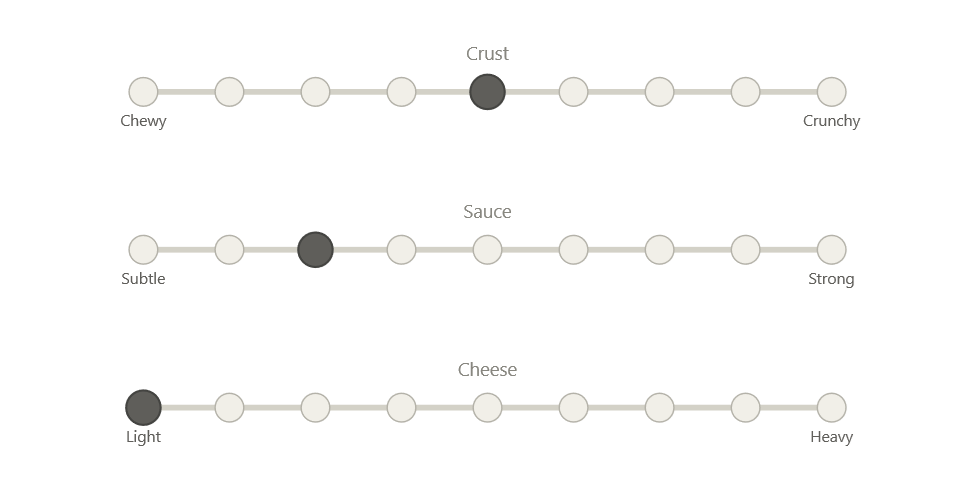
Hot Oil
Riko’s is one of the places that pioneered hot oil pizza. You should try it.
What is hot oil pizza? Stamford is the origin of hot oil pizza, and it is arguably the city’s defining culinary cuisine. Originally created at Colony Grill, it has since spread to other pizza places around town. Walk into any pizza place and ask for “hot oil” and they will know what you are talking about (although, not all places offer it).
Riko’s has some lore about its founders’ relationship with Colony Grill, but the important thing to know is these two pizza places are often considered very similar.
The assessment for Feather Ruffler’s Definitive Guide to Stamford Pizza is exclusive to plain cheese pizza. With that in mind, the above assessment is for plain cheese. If you are interested in an assessment of hot oil pizza, read below:
Crust. Identical to the cheese pizza experience. A crispy cracker-like crust. Average.
Sauce. When you add spicy hot oil to the sauce of a pizza – that becomes the most defining element of the pizza. It is remarkable how much this changes the bite experience. The hot oil redefines the other elements to be in service to the hot oil flavor. The “heat” of the hotness can vary – but in my experience, Riko’s tends to be “hotter” than Colony Grill. Dominant.
Cheese. Even less of a focus with the sauce overwhelming the flavor profile. Sparse.
Sally’s Apizza
New Haven style.
66 Summer Street, Stamford, CT 06901. Downtown neighborhood.
Primary Element: Crust
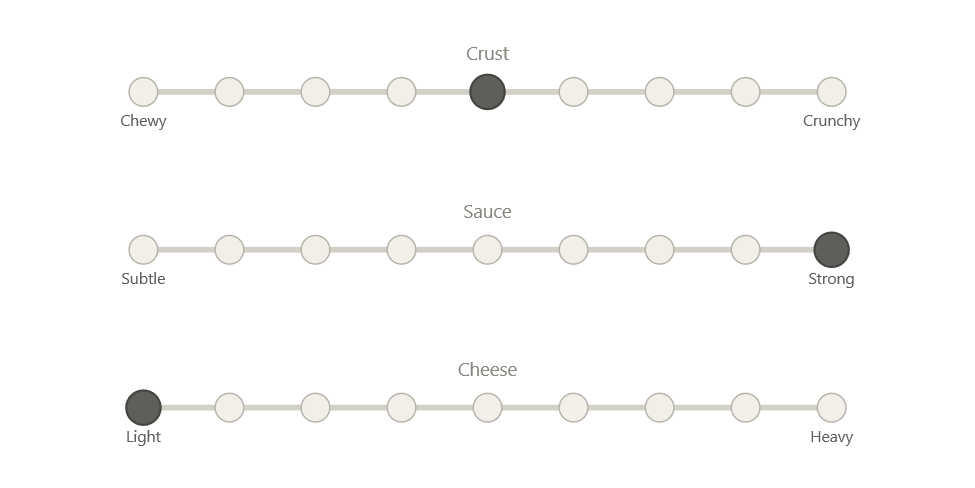
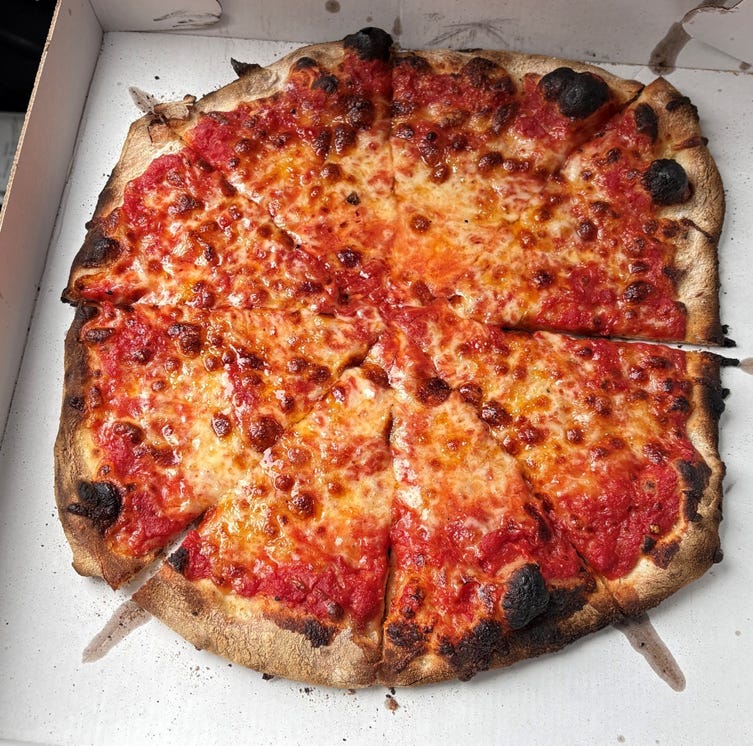
Crust. Sally’s crust is easily the most charred of any Stamford-based pizza. The end crust is often charred, but the underside of the pie also has a number of charred blotches. More than any other pizza, Sally’s tastes like it was cooked in fire. This is emphasized by the residual flour on the underside of the crust which gives it a powdery bite experience. Each bite has the crust coat your tongue in flour. This might sound very “dry”, but it’s balanced by the sauce (see below). The crust may be of similar crispiness to other high-crispiness rated pizzas on this list, but the charred flavor and flour powder makes it the end point of an extreme. Sally’s pizza is defined by the contributions of its crust, more so than any other pizza. If your standard for pizza is “I want the crispiest crust,” Sally’s is the peak of Stamford pizza. Fire-kissed.
Sauce. Sally’s bite experience is defined by the sauce. Like other similar pizzas, the cheese and sauce are blended together and tightly attached to the top crust. The bite experience is juicy. You feel a lot of fluid rush through your teeth when you bite into the pie. This is a unique experience, but it’s also why Sally’s probably travels the worst of any pizza in the city. If you’re not biting into it within 10 minutes of when it’s done, the sauce cools and the juicy experience is significantly muted compared to when hot. Moderately Strong.
Cheese. Sally’s cheese is lightly applied like similar New Haven or New York style pizzas. When isolating for flavor, it’s clear this pizza gets its flavor from combining with the sauce rather than the cheese itself. Sally’s – like other New Haven style pizzas – offers pies with no cheese at all, which suggests the importance of cheese to enjoying Sally’s. Very Light.
Overall. Locals in Stamford and New Haven tell me Sally’s pizza in Stamford is different than how it tastes in New Haven. This is apparently due to some cooking method that is unique to the New Haven location that cannot be replicated elsewhere due to environmental regulations. I can’t verify that, but even if another variant of Sally’s is “better,” this is still a unique pizza option in the Stamford pizza market. It is the crispiest pizza in the city not only because of the bite experience, but also the flavor profile of a charred crust with powdery residue that creates the impression it really came out of a fire. Even when compared to other New Haven style pizzas, Sally’s is unique. Again though, it’s easily the worst traveling pizza in the city — its flavor and bite experience will change dramatically between “fresh out the oven” and 10 minutes later. I’d recommend dining in.
Slice Stamford
New York style?
581 Newfield Avenue, Stamford, CT 06905. Midtown (Bulls Head) neighborhood.
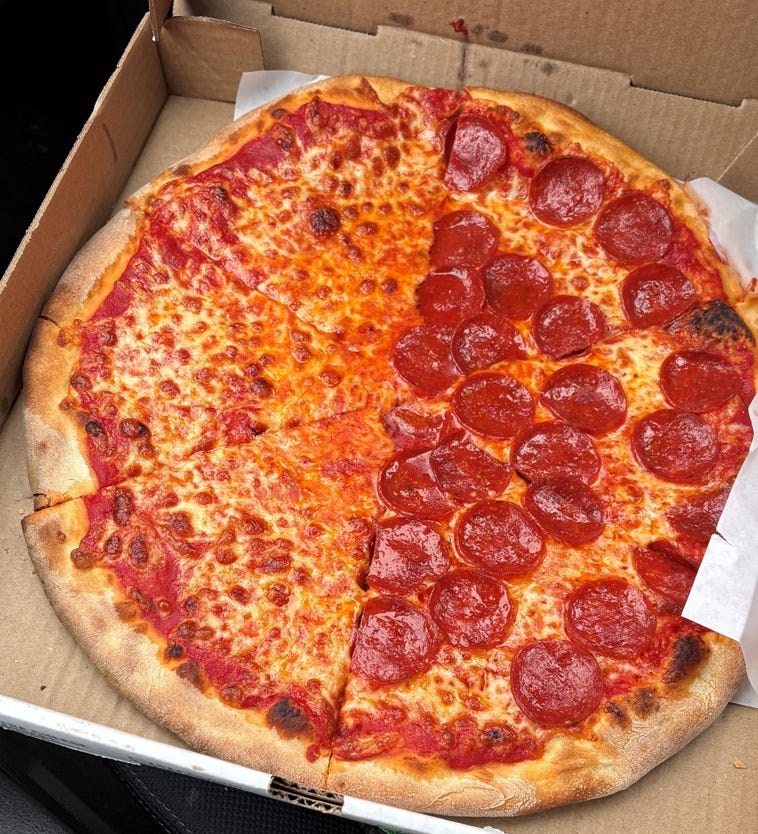
Primary element: Cheese.
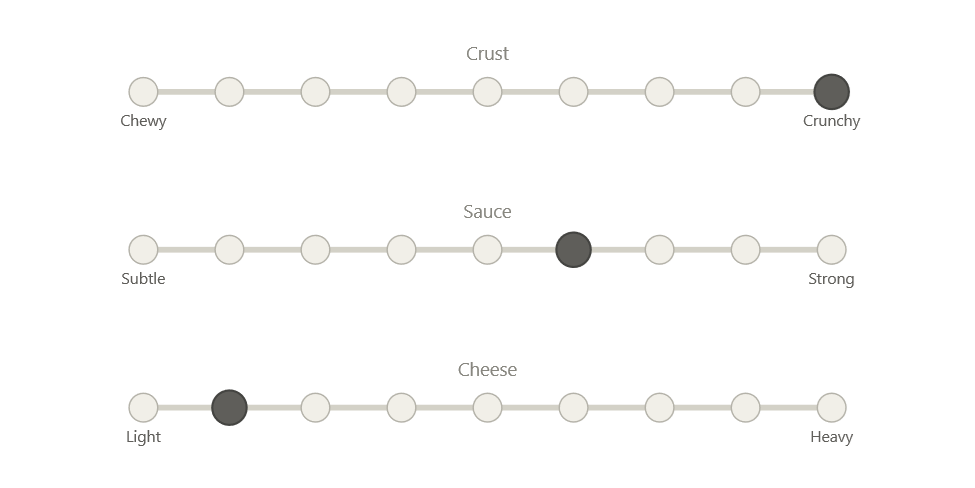
Crust. Mostly a chewy experience, but the end crust is significantly crunchy. The firmness of the crust suggests Slice is going for the experience of a distinctive crunch followed mostly by doughy chewiness, but the crust is thin enough that it all blends together. There is not a distinct “crunch” layer and “dough” layer. It’s all together. Moderately Chewy.
Sauce. Minimal sauce underneath the cheese which suggests this is a pizza where the sauce and cheese meld together. Tasting the sauce on its own, it has a barely perceivable flavor. My intuition says this is because the flavors are embedded in the cheese. Absent.
Cheese. The flavor of the pizza comes from the cheese itself. It tastes as if the cheese is seasoned, rather than the sauce — though more likely the sauce melds with the cheese. If you get a big glob of cheese it tastes salty, with garlic, and other herbs. The cheese stays attached to the slice, but it is possible to separate the cheese as a distinct layer from the crust. While the main portion of each slice is heavy on cheese, the overall slice can be light on cheese as you get closer to the crust — and especially if you order a pizza with toppings. Slightly Heavy.
Overall. Slice in Stamford claims to be “New York style,” but that is not how I would describe it. I would call this a neighborhood pizza. It is very popular and holds the second-highest rating of any pizza place in Stamford on Google Maps (4.7 out of 5, over 300 reviews). I believe it gained that accomplishment because of its variety. Feather Ruffler’s pizza guide is focused on cheese pizzas, but Slice has the appeal of many different styles available to order. When it comes to the basics… it’s pretty basic.
Sergio’s Pizza
Greek style.
985 E Main Street, Stamford, CT 06902. East Side neighborhood.
Primary element: Cheese.
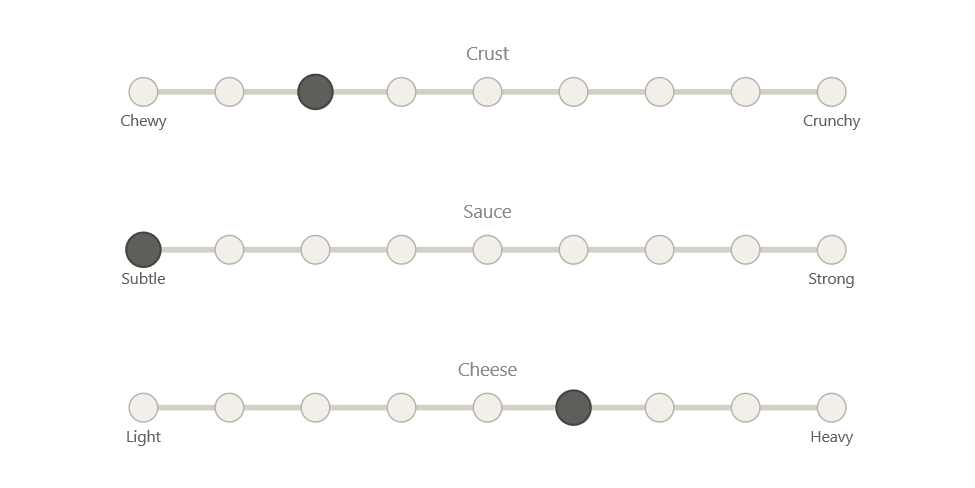
Crust. Sergio’s Pizza is a chewy crust. Like other Greek style pizzas, Sergio’s crust is “brittle.” It maintains its shape and form – it’s not malleable or squishy – but the “crisp” factor is very light in the bite experience. A little bit of bite and it collapses. The under crust for Sergio’s is very soft. You could describe it as “doughy.” In my experience, Sergio’s may be doughier than other Greek style pizzas, but it tends to be a variable pizza. Very Chewy.
Sauce. Sergio’s Pizza sauce is savory and subtle. It’s not sweet. There are few herbs or spices to create strong flavors – and the seasoning is evenly spread out so there isn’t the rare burst of atypical flavor you may get with other pizza places. The sauce has more of a general “savory” taste rather than distinctly tomato or other flavors. The sauce may have more of an impact if the cheese wasn’t so prominent. Slightly Subtle.
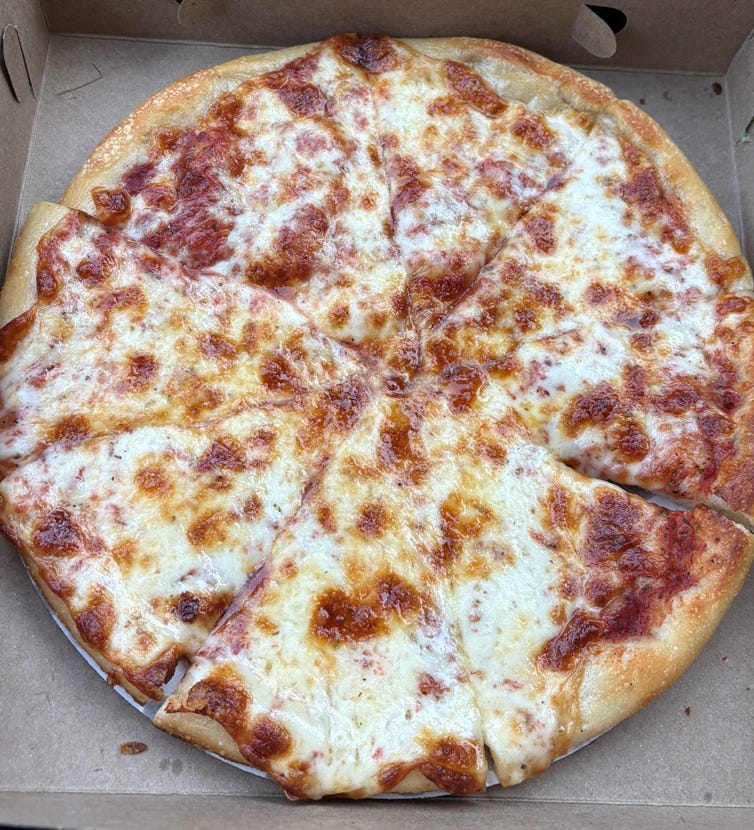
Cheese. Sergio’s Pizza is roughly as cheesy as other Greek style pizzas. The “flavor” of Sergio’s Pizza is cheese. The amount of cheese is significant enough to result in a variety of deeper and lighter cooks of the cheese – evident in the brown spots you can see in photos. These varied cooks of the cheese created a varied flavor profile within the continuum of “cheese flavor” which is unique to Greek style. The texture of the bite is also dominated by the cheese. Most of what you’re biting is cheese and there is so much of it the “chewiness” is derived because of the amount of cheese. If your standard for pizza is “as much cheese as possible,” Sergio’s is one of the best options. Loaded.
Overall. I have to say the most significant thing about Sergio’s is it is unbelievably cheap. You can get a small cheese pizza for $6. That’s 60 cents per 166 calories. I think that is the most affordable meal in the whole city. Sergio’s has a lot of similarities to other Greek Style pizzas, but its low costs are probably why it is tied as Google Maps’ third-highest rated pizza place in Stamford (4.6 out of 5, over 900 reviews).
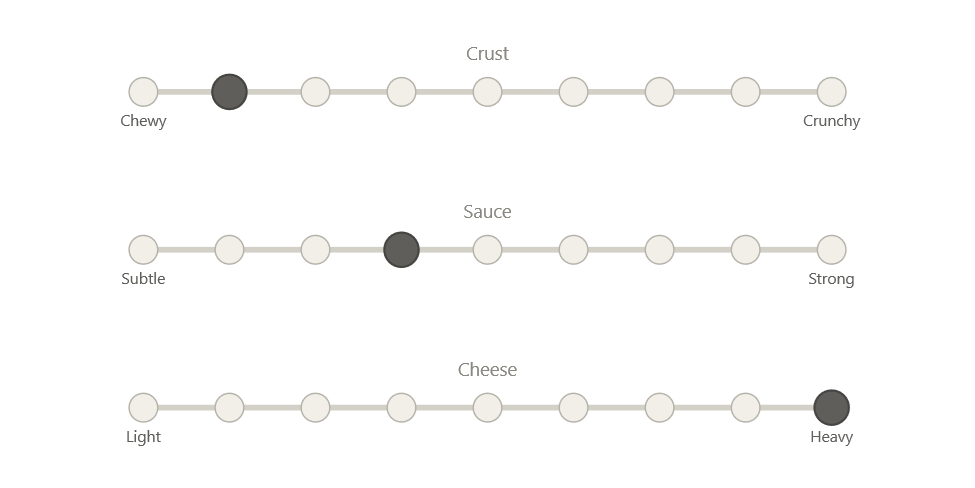
Sorrento
Neighborhood pizza
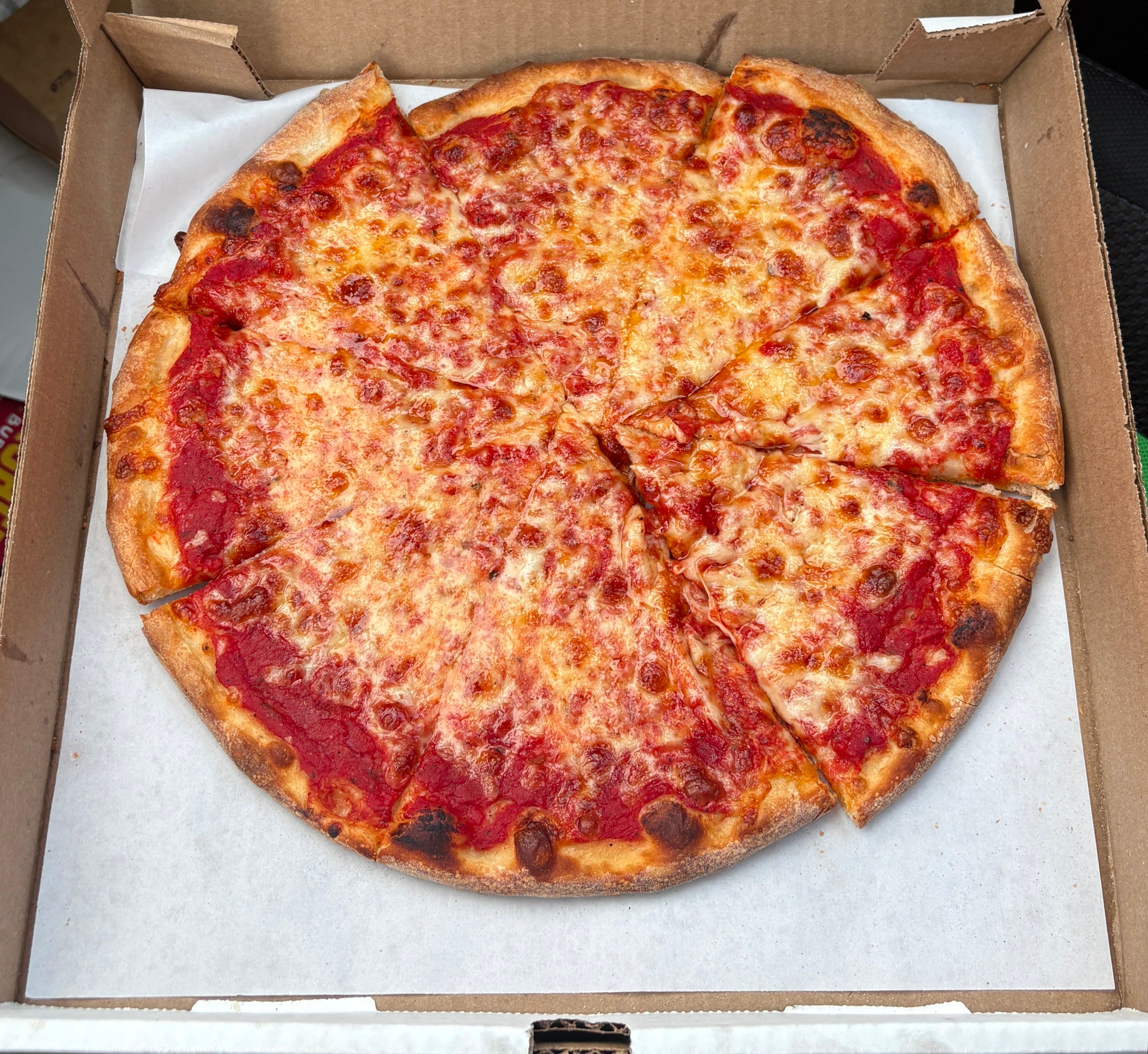
Primary Element: Sauce.
Crust. Sorrento pizza’s crust is firmly on the crunchy side of the spectrum. Very light flour residue gives it just a hint of fire-tasting flavors. There is infrequent charring on the end crust. Under crust is brown. The under crust doesn’t have the same distinctive “crunch” as other similar pizzas, but it ranks similar to those pizzas. The influence of the flour residue and the end crust being above average in crunch earns it. I was also personally impressed the bottom of the pizza stayed dry because the top of the pizza is really drenched in sauce. 7/9 Moderately crunchy.
Sauce. Sorrento pizza’s sauce launches it into the status of one of the most unique pizzas in Stamford. There is ample sauce on Sorrento’s pizza, and the bite experience carries all the indicators of that primary element. This is a wet pizza. Cheese is gooey. It frequently slides off. It drips. Red sauce pools in a circle around the edges of the pie. The flavor of the sauce itself is fairly standard. It has a savory tomato flavor. Nothing crazy. It doesn’t necessarily overpower other flavors… but I really cannot taste anything in this pizza other than the sauce. Obviously the crust adds texture, but the entirety of the flavor is the sauce. 9/9 Dominant.
Cheese. Sorrento’s pizza doesn’t aim to provide less cheese, but the cheese essentially has no contribution to the bite experience. It’s applied well enough as any other pizza standard, but the bite experience of Sorrento is dominated by the volume of the sauce. I can’t claim there is a “light” amount of cheese, but the evaluation has been tilted to reflect the diminished importance of the cheese. 2/9 Moderately light.
Overall. Sorrento is the only pizza place in this guide that gets a dominant rating for its sauce other than the two hot oil pizzas. I’m genuinely kind of astounded. I didn’t know it was possible. It appears put together the same as many other pizzas in the area, but this is perhaps the best example of how pictures of pizza can be deceiving.
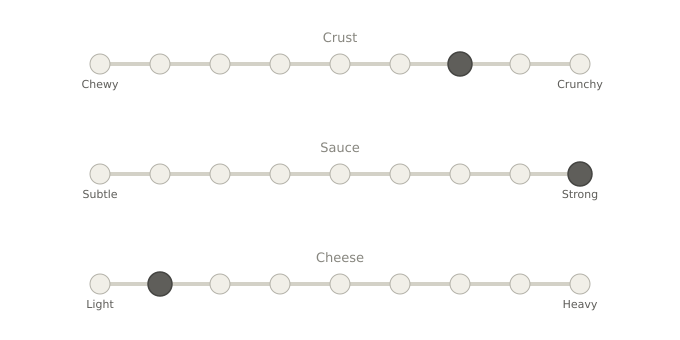
Westover Pizzeria
Neighborhood style.
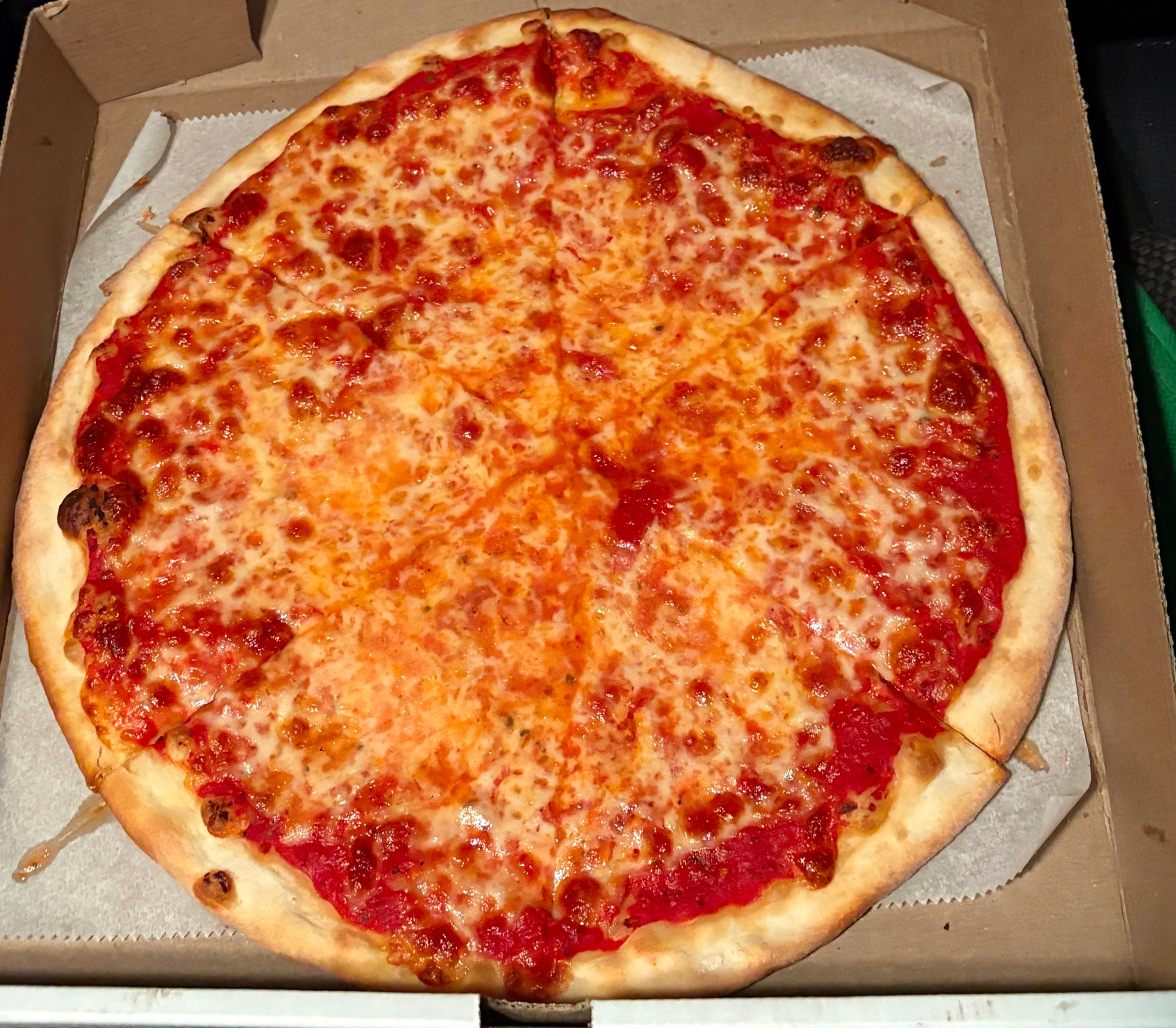
Primary element. Sauce.
Crust. Westover Pizza’s crust is one of the thinner options in the city. The under crust has a very low profile with close to no distinction between the outer layer crunch and the bulk of the under crust itself. This is most present with the end crust which has a very crispy bite experience. The end crust is firm but not overtly “hard” like some crunchier crusts. There is some slight influence of the “fire taste” you get from other crunchier pizzas. Westover Pizza’s crust has light flour residue and the under crust has some browning – or “charred” – spots, but it is subtle compared to other pizzas that lean into those flavor profiles. It creates a nice contrast for the under crust portion of the pizza while the end crust can have a cracker-like bite experience. 7/9 Moderately Crunchy.
Sauce. Westover Pizza’s sauce is plentiful but subtle in flavor. This is a wet pizza. Cheese slides off easily. In fact, more cheese slid off during this assessment than any other pizza in the city. Both of the first slices/bites had cheese slide off. Subsequent bites after the pizza cooled down reliably pulled cheese from the rest of the slice. The sauce is very prevalent at the end crust where a pool of red sauce encircles the entire pie. While there is a lot of sauce volume, its flavor is mild. It has the light acidity/savory flavor profile you’d expect from a tomato sauce with little seasoning. The biggest contribution of the sauce is balancing out the crispiness of the crust. It’s a strong contrast of two different elements. 7/9 Moderately Strong (in volume, not flavor).
Cheese. Westover Pizza’s cheese slides off so frequently it gives the impression there is not a lot of it, but I think it is more accurate to say there’s just a lot of sauce in proportion to the cheese. Even if you peel off a layer of cheese, you’ll see thick bunches of sauce attached to the underside of the cheese layer. This is an average amount of cheese – albeit dwarfed by the other elements. 4/9. Slightly Chewy.
Overall. Westover Pizza has a unique position as a high-volume sauce that does not dominate the flavor. It makes it difficult to assess the sauce in our typical rating since we select for the influence of the flavor – rather than the amount of the sauce – but it’s obvious the sauce is the most influential element of the pizza. The pizza also travels fairly well. While the “fresh out of the oven” experience is a bit different from 30 minutes later, the contrast of a lot of sauce and a crispy crust is still present in both situations. This is very much a sauce-oriented bite experience.
This is the location considered for this guide.